


LIVE TOGETHER
VIVRE ENSEMBLE
Solo exhibition of French artist Julie Alegre artist.
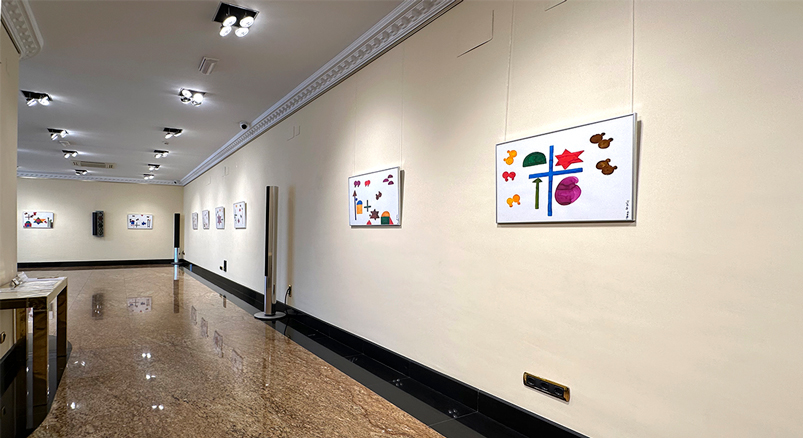
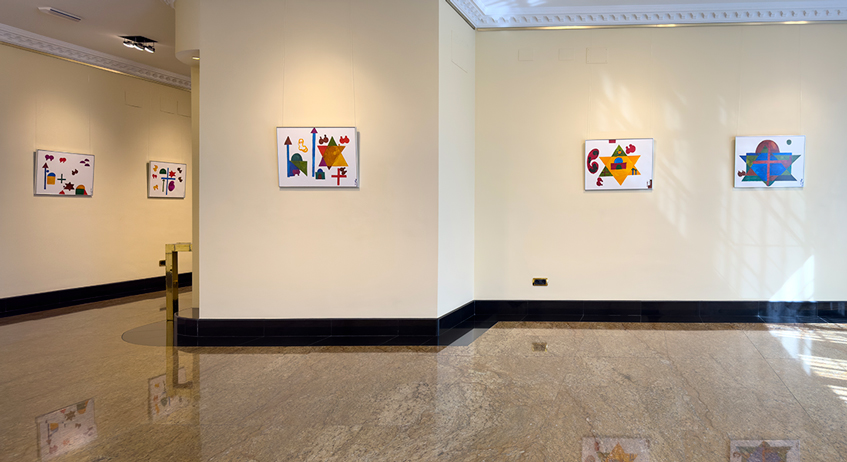
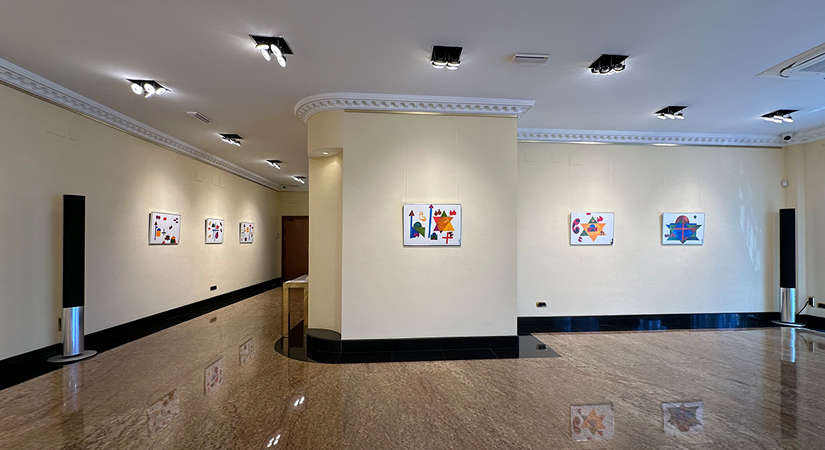
In this new solo exhibition at STOA, Julie Alegre uses her usual technique of ink on paper, presenting a particular vision of the religious conflicts that her country, France, endemically suffers from, although the problem is generalised in almost all of Europe, she focuses on the religions of the Book. She intends to find the ideal utopia of perfect cohabitation, an ideal as old as the very beginning of intercultural coexistence, problematic for centuries. For Julie, hope in achieving this enterprise rests in the feminine world, omnipresent throughout her career.
On this occasion we have the extraordinary reflections of Roberto Ballesteros, who provides a fresh new analysis of the work of this painter.
JULIE ALEGRE AND THE SACRED VALUES
The adjective “sebasmatic, Σεβαιος” is used in the conceptual field of some philosophical schools to specify everything that has to do with the knowledge of the values of the sacred, whether these are religious values (referring to numens or gods) or whether they are holy values (referring to exceptional men) or fetish values (referring to sacred things).
Anyone who knows the work done so far by Julie Alegre, knows that it is full of sacred forms, religious symbols, and fetishised figures that form a unique and unexpected sebasmatic map. At the same time, in each of her new exhibitions, like the one we present to you now, she adds to her trousseau chest, ‘bottom drawer’, (referring to the place where a bride would collect household items for married life) all those things that Julie, as a bride of Art, has established throughout her already mature career as a valued artist.
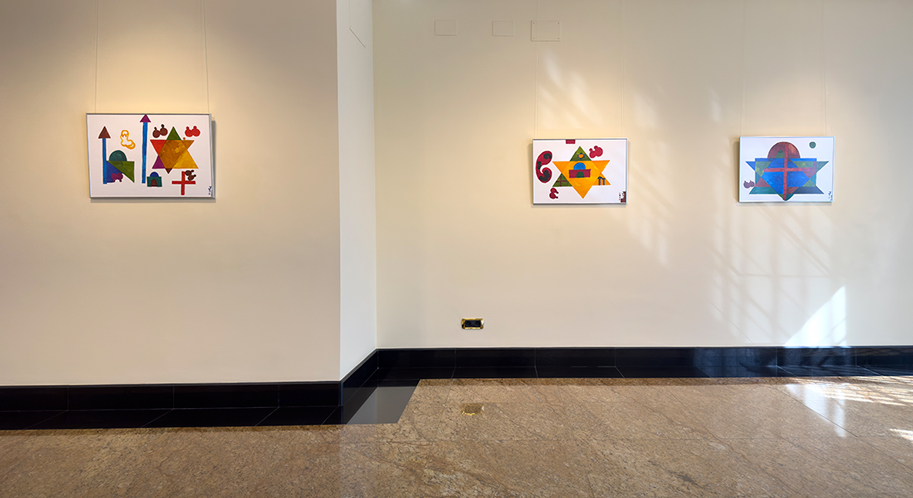
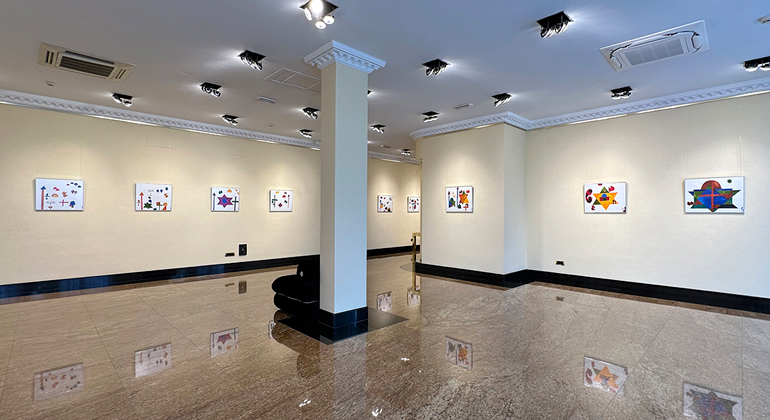
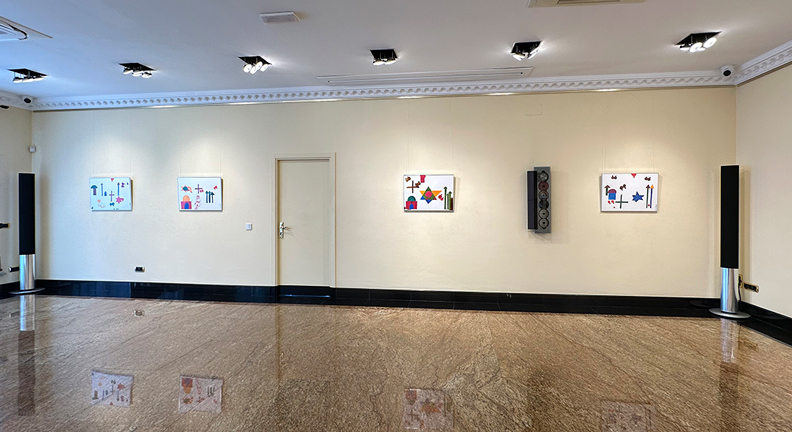
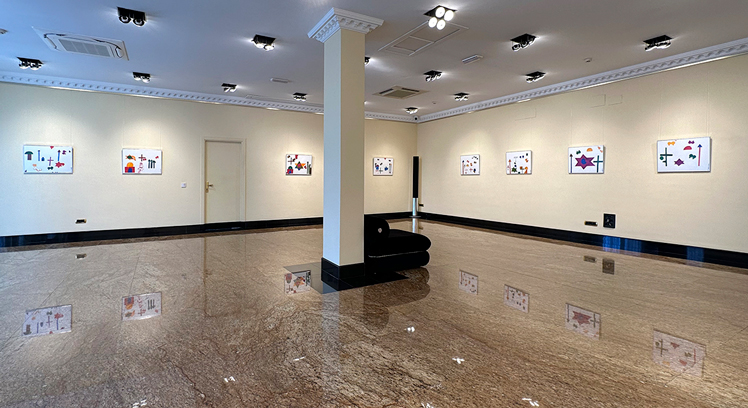
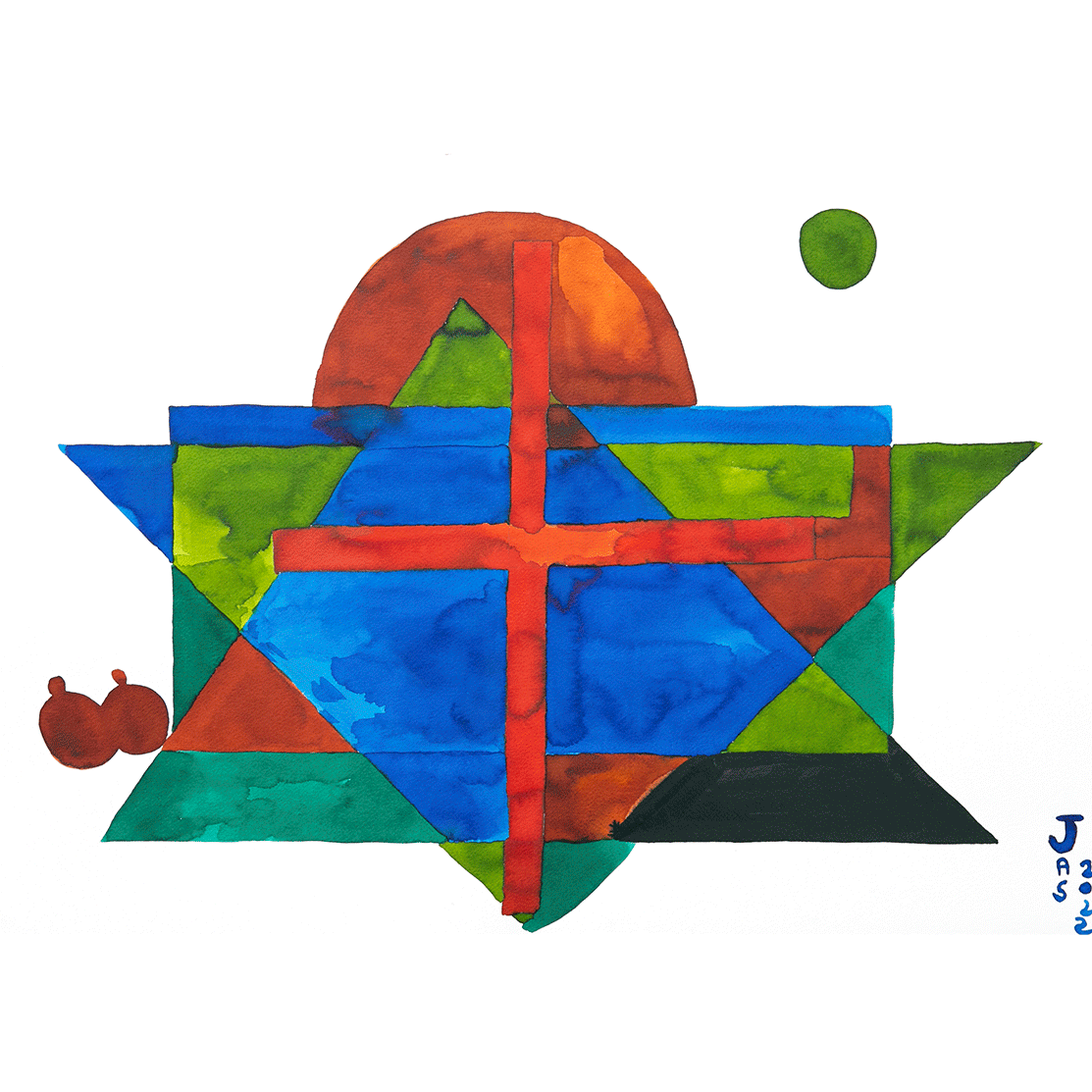
In this new collection of her work, the viewer will be able to appreciate that each painting looks like an open handkerchief, and that, if imagined horizontally, could be a map. On it, Julie would place, one by one, the pieces of her trousseau chest, chosen for each of her compositions. We can imagine her officiating the pictorial magic, carefully placing the forms on the concentrated “altar´´. Once the ritual is over, it is placed before the spectator, who will then witness the transubstantiation of the symbols, colours and shapes in this codex. The artistic material positioned in this way forms a coherent set of handwritten codes waiting to be deciphered. Crosses, stars, minarets, breasts, and closed domes are transformed into towns, beliefs, rituals, wars, women who share baths, passions, fears, and memories of songs and glances.
If this were the case, Julie would become a priestess of her own conjured tribulations. Inside the temple of her atelier, on the “altar” of her paintings, she would assemble each piece, perhaps at the mercy of distant chants; Someone may wonder, is she aware of the sacred act? Of course, it is difficult to prove that all the symbolic substance that she has formed seems to have logic, meaning, and rhythm, and if it constitutes a liturgy, a solemn act. She does not seem like an artist who searches for the extraneous, but rather flees from it, or if she faces it as a mystery she tries not to cover it up, but to invoke it. This can be seen throughout the exhibition; it is the sentimental geometry of each painting.
The objects and shapes, move and form, jumping on progressing ladders. Some objects go up and others stay down. Sometimes she divides the map into two spaces, and on a specific object and of her sentimental substance, she places a large dot or point, that distinguishes it from the others or signalises it with a contact. Julie paints using the memory of the times when, as a child, she bathed like the women in the painting. The hammam was a joyful setting and a constant sentimental adversary. In the entirety of this work, Julie is seen settling accounts with the enemies of her non-artistic world, the enemies of the human, the intolerable addicts of the simple and vain, and she goes against the radicals and extremes of the insane ego.
If we wanted to do a geometric analysis of the systematic placement of some of the objects in each painting, perhaps we would find a precise and exact meaning. One only has to look around and see that among the symbols representing the great religions of the Book, the Jewish, the Christian and the Mohammedan always appear in search of a desired dialectic, but never resolved and often invented by fictional history or by the interest of some crusade.
Religiosity, represented in the work of Julie Alegre, may be more of a socialising desire to understand and tolerate, rather than a personal recognition for the services provided to those people who, without asking, they blessed and saved them. Perhaps that is also why the fetishised symbols of each of them, including religions such as the Egyptian one, are drawn in so many irregular or imperfect ways whether they are presented in an analogical scheme with the Christian Cross, the Jewish Menorah, the Djamaa el Djazaïr, geometrically vectorized, all this forming her symbolic-sentimental map, her itinerary of the soul.
The artistic gynaeceum represented in Julie’s work is also a gravitational constant that contains a juicy catalogue of allusions, references, synthesis and variations, which produce an effect of constant thematic unity, point and counterpoint for many of the painter’s fetish themes, unlived motherhood or represented sexuality. It is here that the artist’s craft reveals the inescapable condition of casting out her demons and not hiding the joy of existing artistically and celebrating it, of having as a sacred mission the search for the coherence of her work. This exhibition is a wonderful opportunity to start admiring the artistic virtue of Julie’s works on her maps.
But virtue is not a shield against evil. Artistic coherence does not have to be consistent with one’s personality, and sometimes the person is presented as a contradistinction from the work. The strange personalities of many artists are not a condition of genius, but it should be noted that the exceptional virtues of those who were inimitable and have gone down in history for their incomprehensible personality, have left us the greatest works of art, most of them in circumstances of a painful, burdened life. They have, however, served as a reference, example and model for subsequent generations; the list is long and known to all.
When a painter like Julie exhibits work as schematic as the one that we are currently presenting to the public, each piece of the codex stirs its history, its psychology, Sociology, Anthropology, with a well-resolved artistic technique, with a personal message that yearns for harmony and hope. It is unthinkable that Julie Alegré is just another artist, it is evident that among her feminine powers she has great gifts for understanding the world around her and constructing her map of synthetic and aesthetic sensations.
Roberto Ballesteros
Curator

JULIE ALEGRE
OUR FUTURE ASSOCIATION
Ink on paper
50 x 70 cm
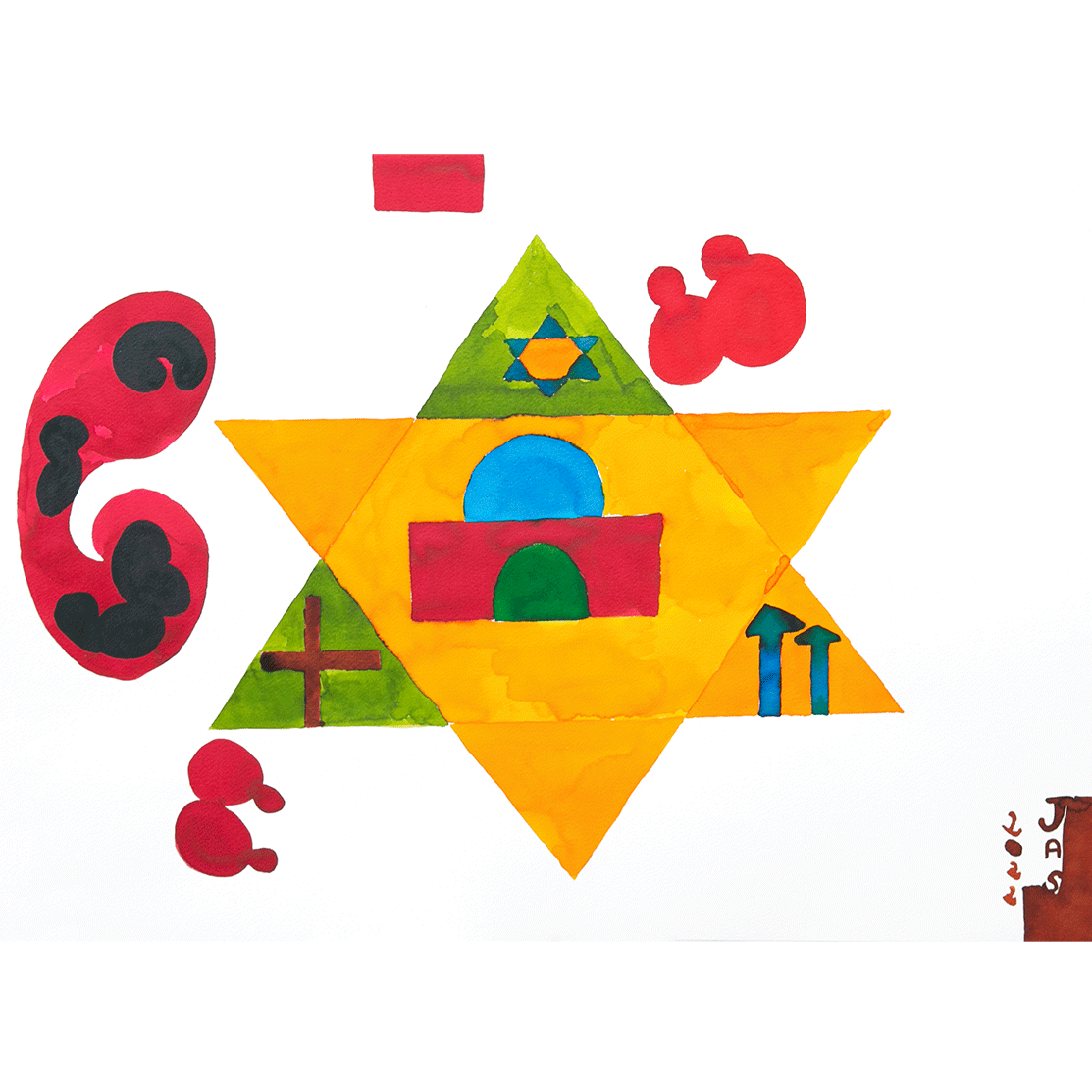
OASIS CITY ASSOCIATION
Ink on paper
50 x 70 cm
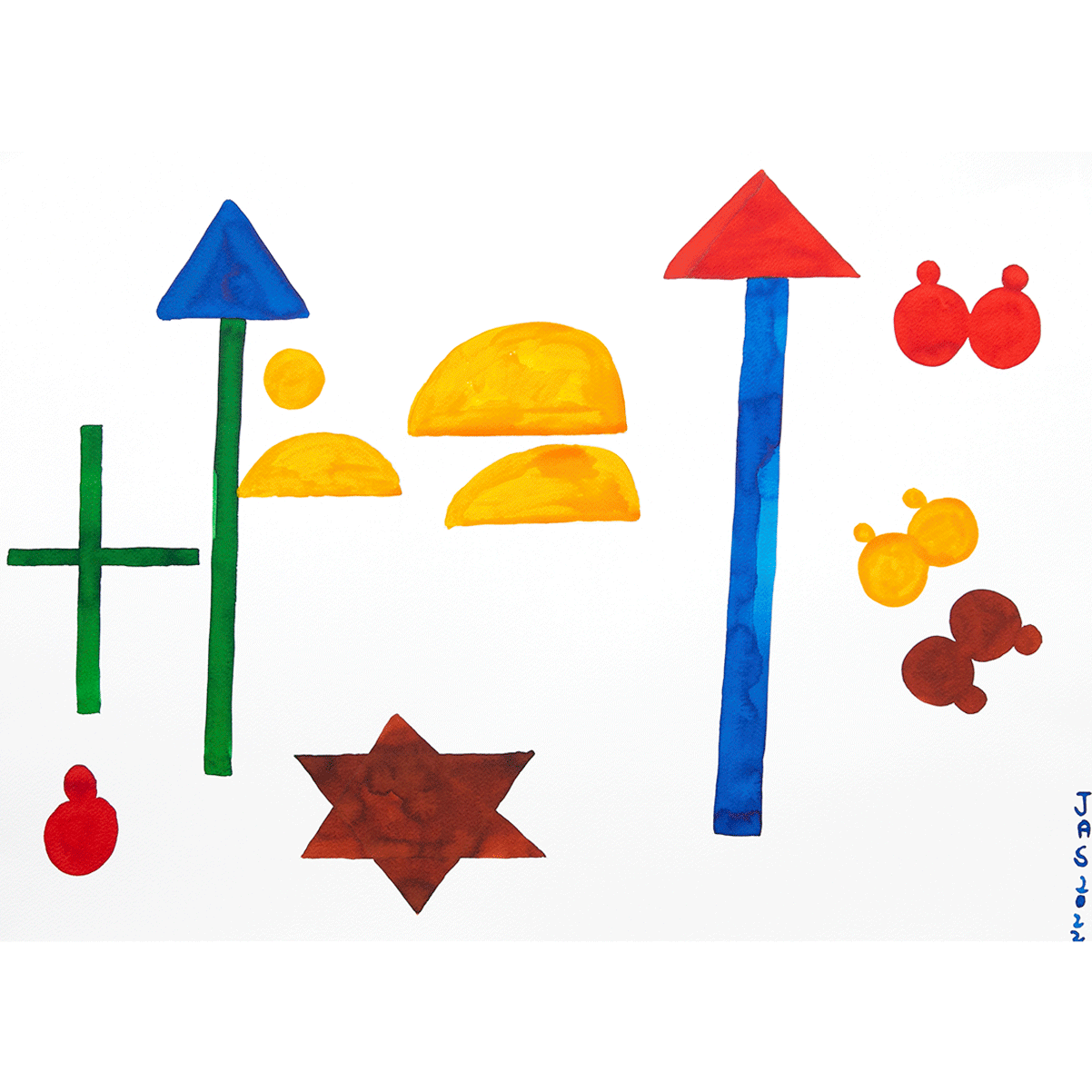
ARTS NEIGHBORHOOD
Ink on paper
50 x 70 cm
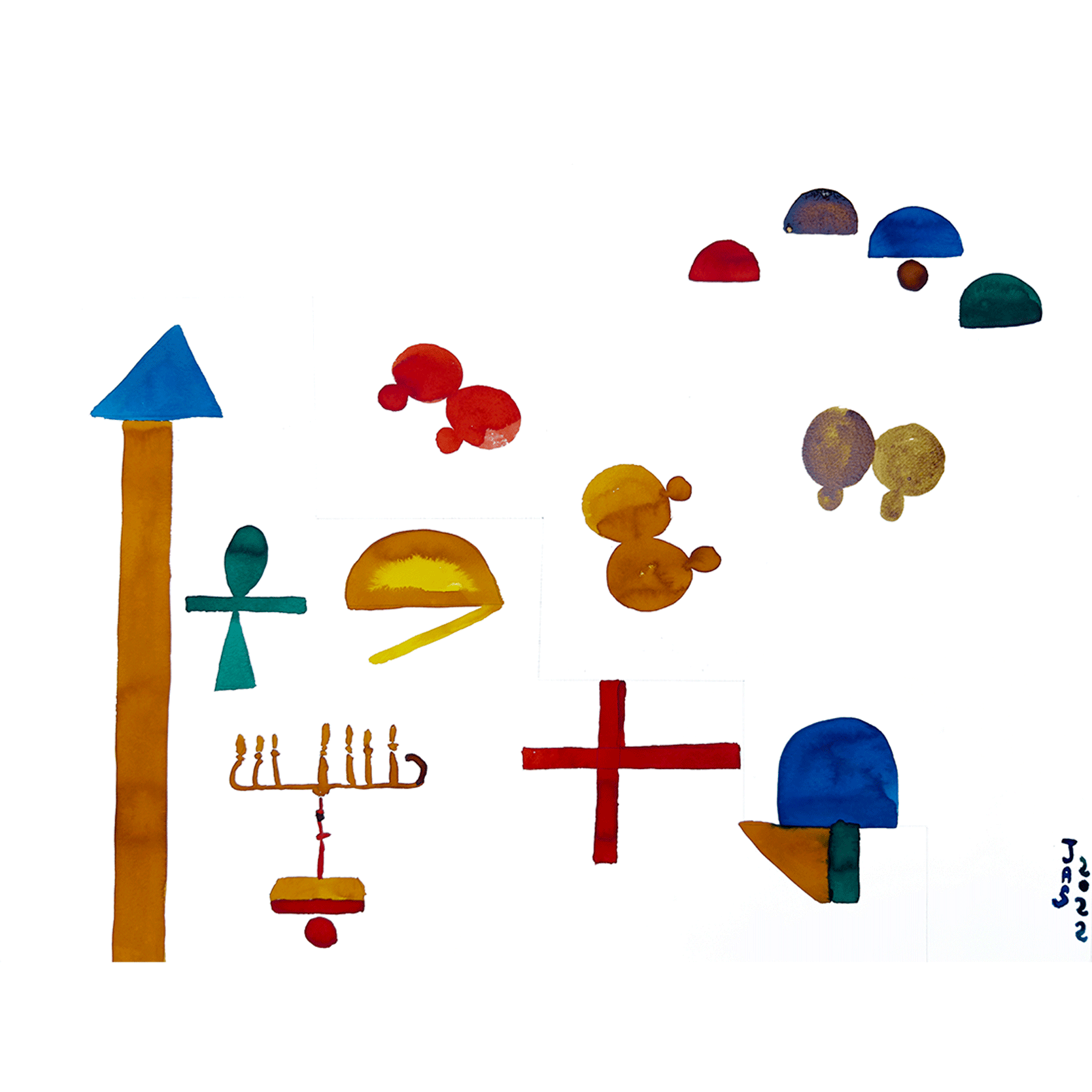
NEIGHBORHOOD OF TOLERANCE
Ink on paper
50 x 70 cm
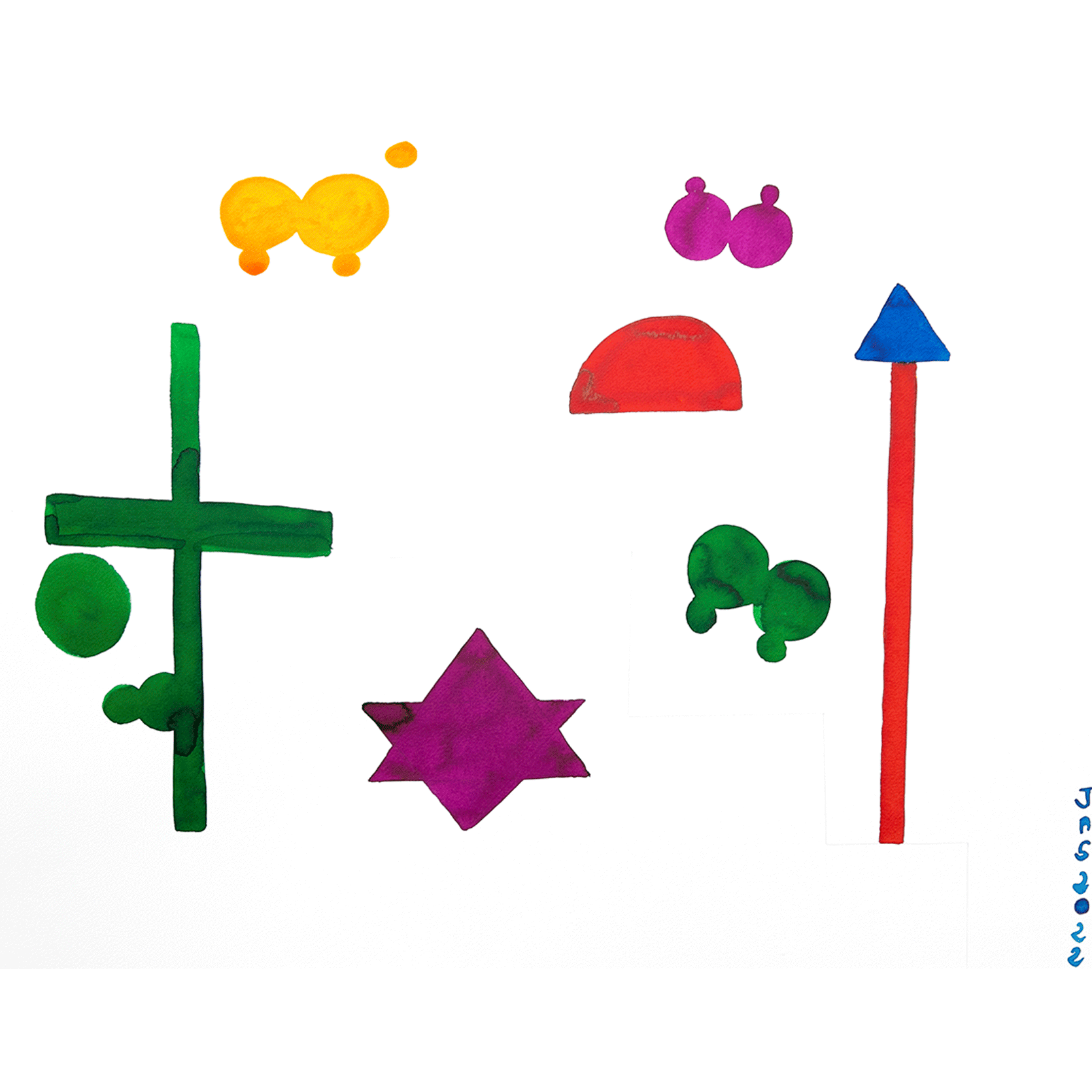
SPINNERS NEIGHBORHOOD
Ink on paper
50 x 65 cm
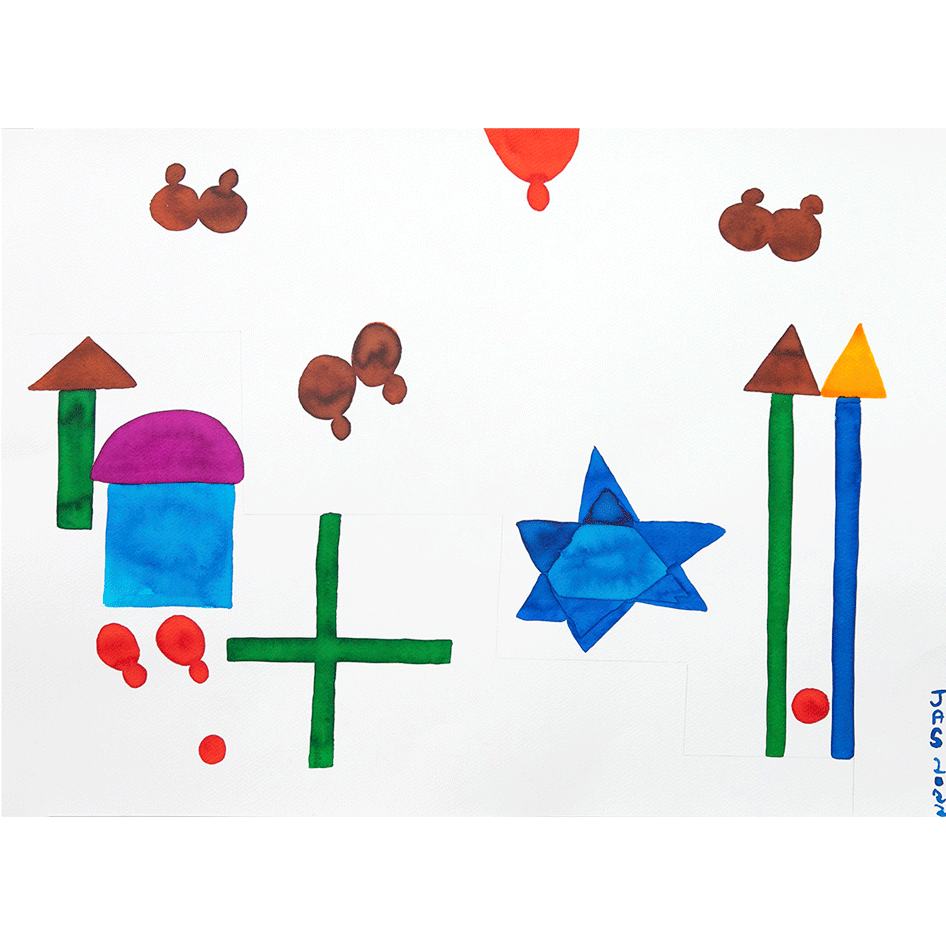
SHOE MAKERS NEIGHBORHOOD
Ink on paper
50 x 70 cm
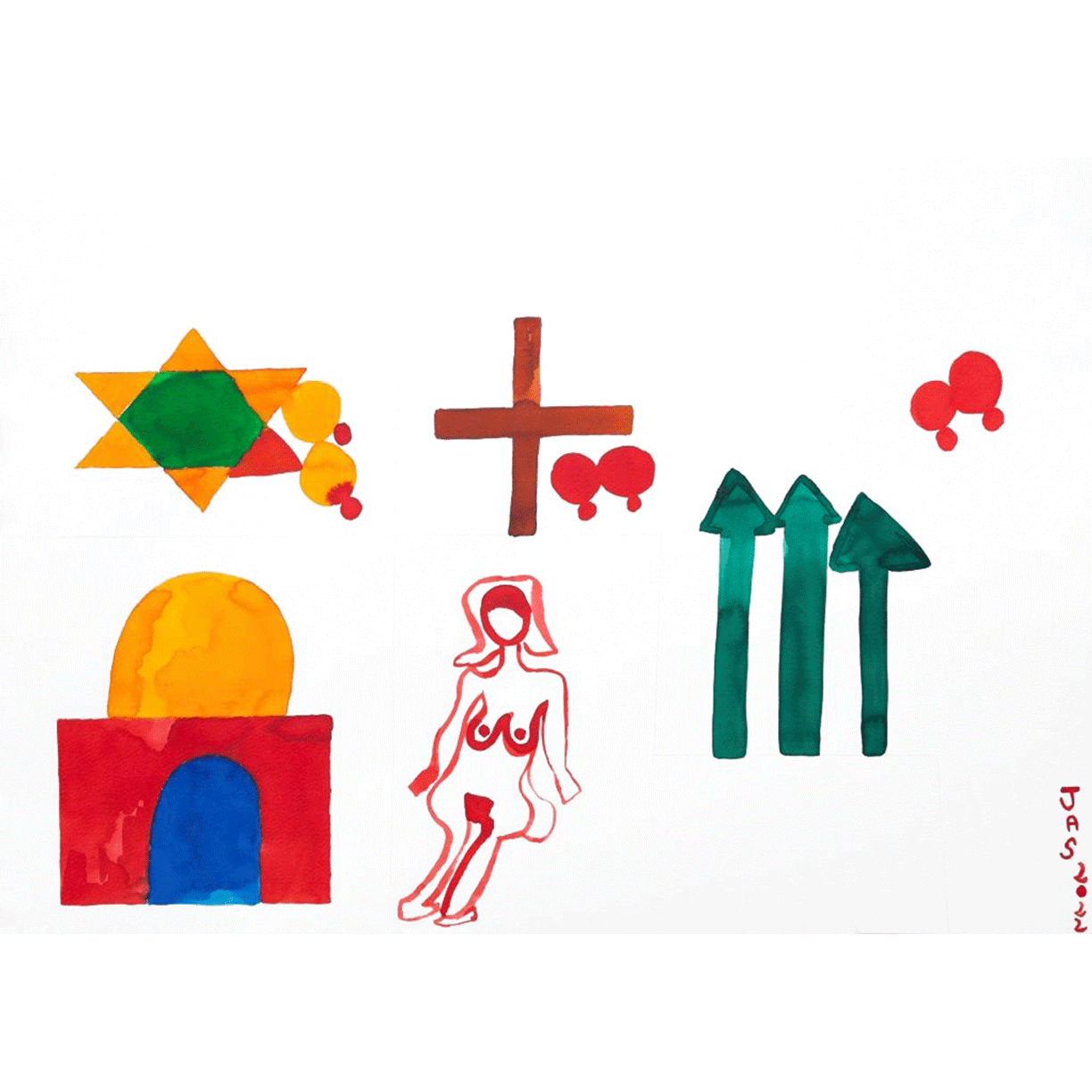
NEIGHBORHOOD OF MANY RELIGIONS
Ink on paper
50 x 70 cm
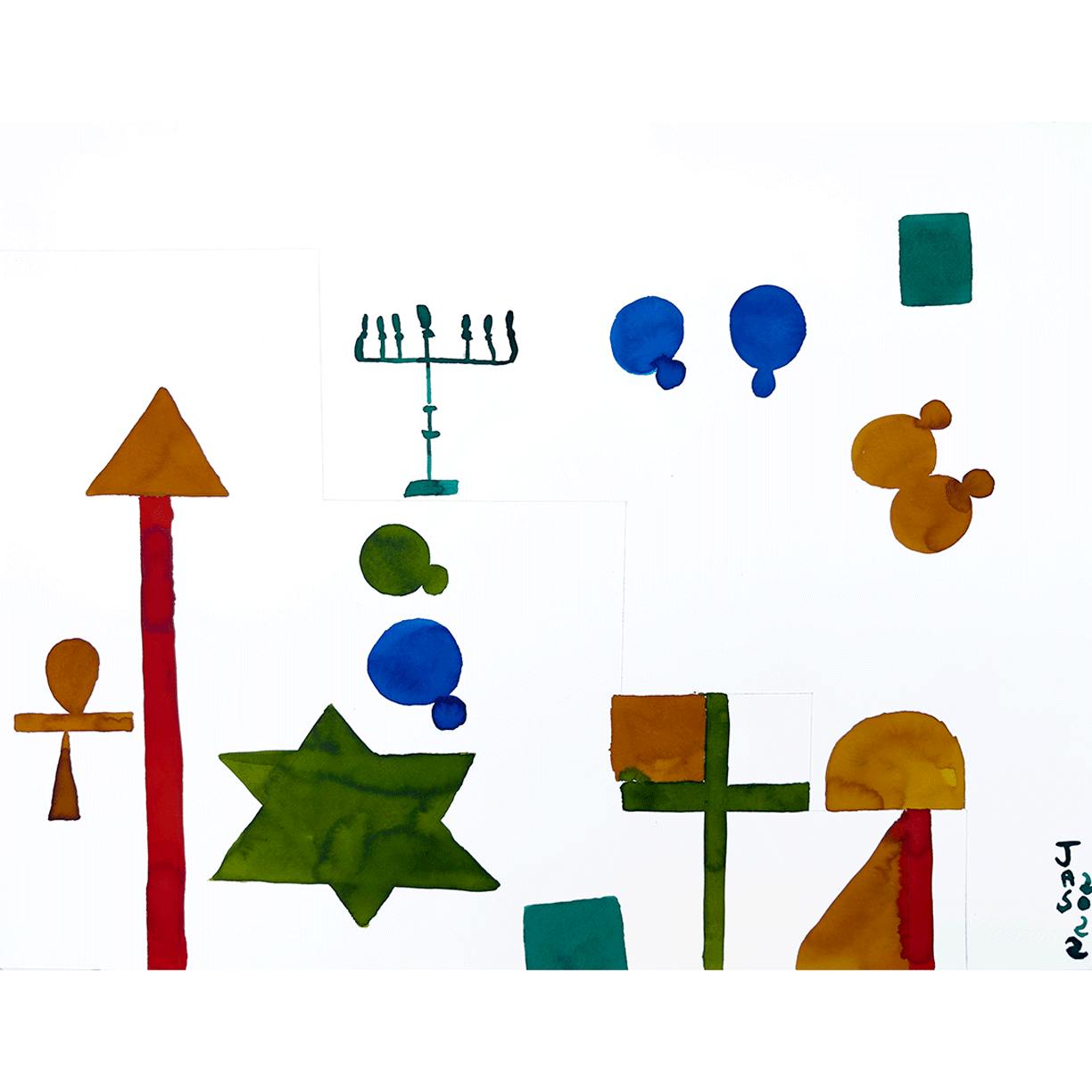
INTERCULTURAL NEIGHBORHOOD
Ink on paper
50 x 65 cm