THE NATURE OF AN INSTANT


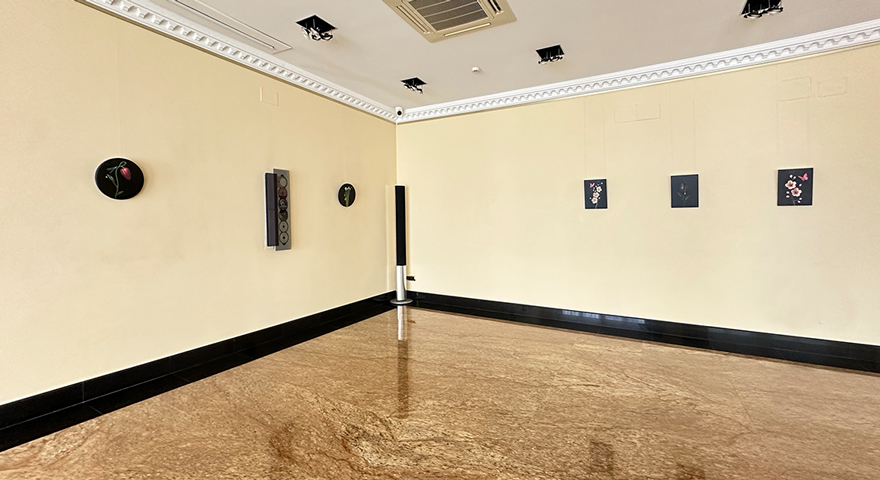
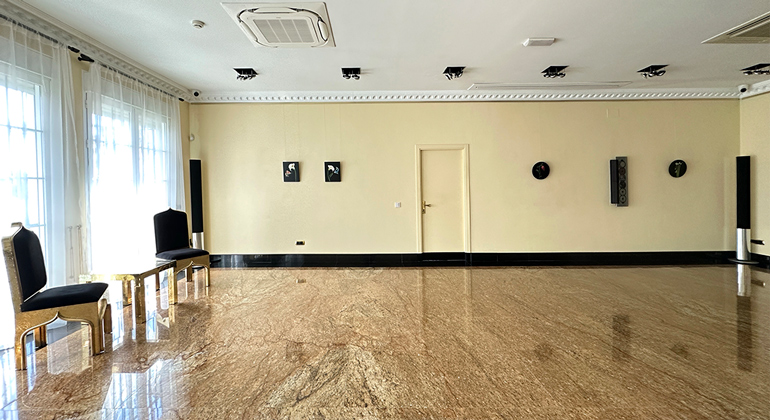
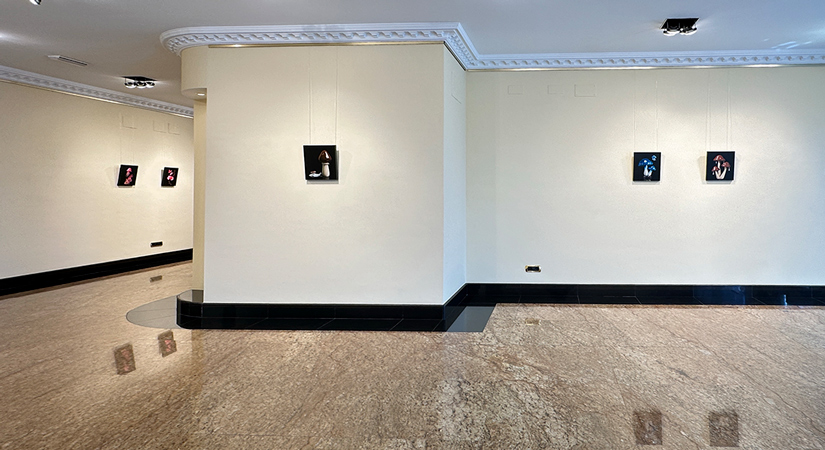
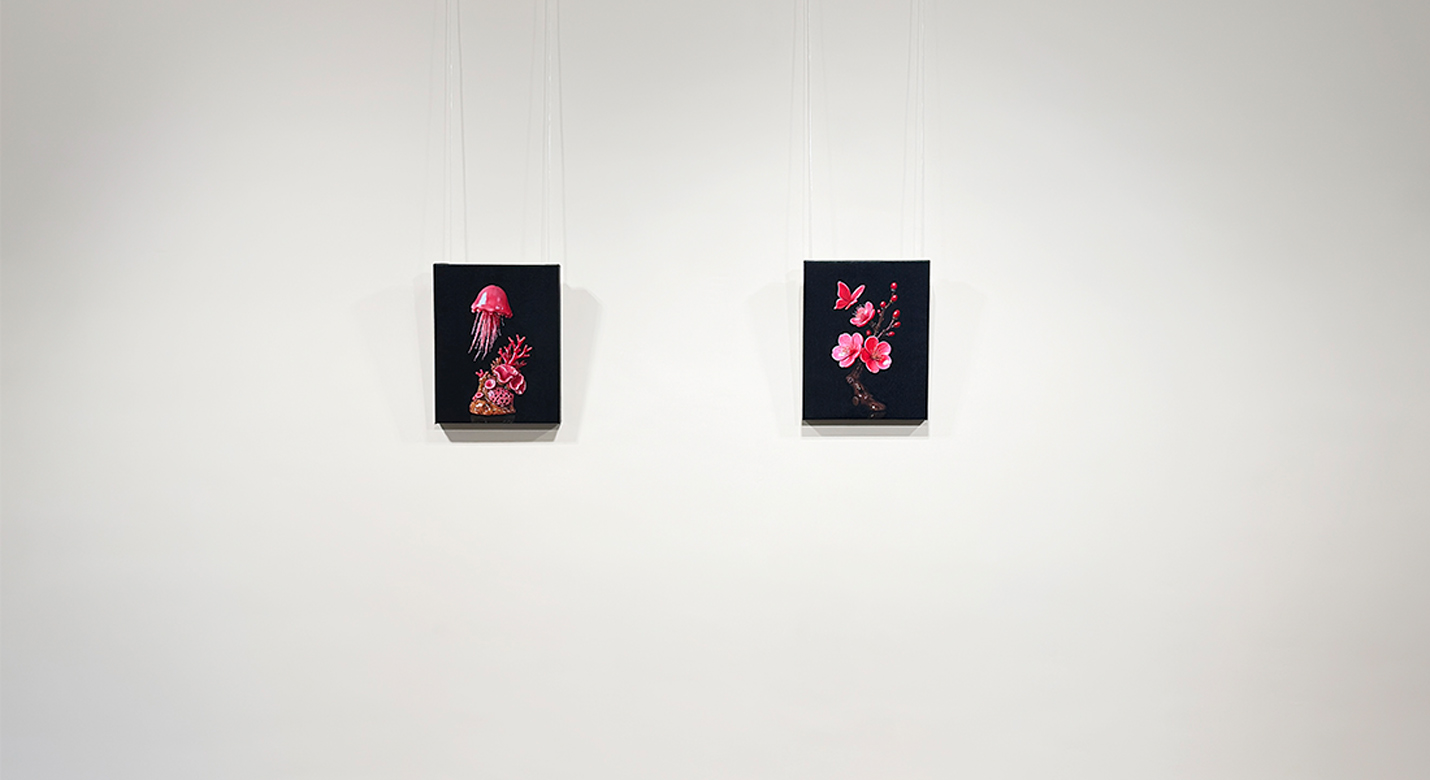
“The Nature of an Instant” is Salustiano’s fourth solo exhibition at STOA, his fifth if we include the joint exhibition “F2” with artist Conchi Álvarez.
As with his recent shows, it has been curated by Roberto Ballesteros and Conchi Álvarez.
Salustiano is the artist of Beauty, and as the high priest of this deity, he creates paintings in which technical perfection is sacrosanct. He elevates his techniques to the level of the Great Masters. His portrait series are striking for their symbiosis of Neo-Renaissance and fierce contemporaneity, making them instantly recognizable and unique. In this exhibition, we discover a new series on Nature.
THE NATURE OF AN INSTANT. Liturgy and Sensuality
The new collection of paintings by Salustiano García Cruz, presented at STOA, will unexpectedly place viewers before a world of weightless and provocative images, as though suspended within space-time.
Affirming his unmistakable style of isolated figuration, opaque backgrounds, and precise color, the Sevillian artist, in this collection, invites the viewer to contemplate slowly and attentively. Faithful to his aesthetic principles, his works do not narrate a story nor describe a specific scene; rather, they accomplish something entirely different and eccentric, something akin to… perfecting a moment?
Gotthold E. Lessing, in his reflection on the Laocoön (1766), suggested that painting should not represent a complete action, but rather a specially chosen instant — a moment that silently contains what has just occurred or what is about to take place. As in these works by Salustiano, the instant is not only selected, but constructed as unique and essential among infinite possibilities.
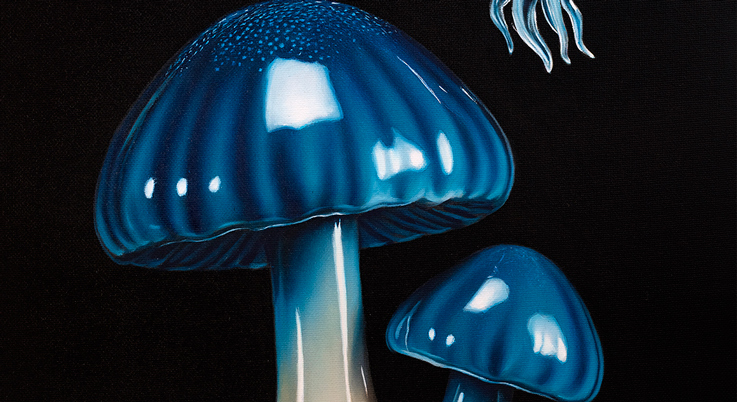
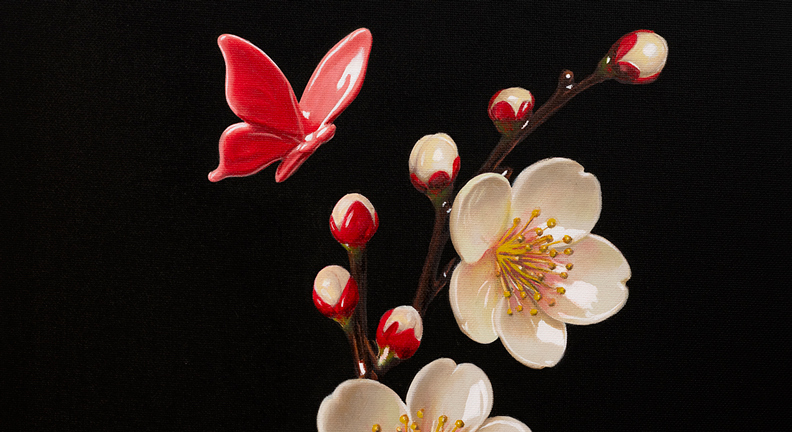
As the superfluous dissolves into the dark and rounded ether, the biodiversity within each canvas illuminates form with a particular porcelain-like brilliance. Time appears to stand still, yet in truth it reorganises itself in order to suggest and biopsychologically provoke the understanding of stasis. The strength of these oils resides in this tension of clarity. There are no distractions. The gaze fixes itself, endures, and gradually begins to act upon the observer. The artist does not seek to reveal something hidden, but rather to allow the visible to disclose a living, new presence.
Thus, when standing before these works, we do not merely assent or dissent; we also transform our manner of seeing. The image is not exhausted by what is perceived at first glance: it persists, insists, and invites us to return to it. Rather than representing the world, these pieces reorder it into an instant of sensuality and lucid silence. Nature ceases to be landscape and becomes fresh essence.
In Salustiano’s paintings, nature ceases to function as representation and becomes structure. Vegetal and organic forms no longer refer to an external world, but confront us as closed systems of matter, tension, and meaning. The living appears immobilised, isolated, and elevated to the category of icon, where the biological and the symbolic coincide without narrative mediation.
Salustiano seems to compel us to shift our gaze away from the representation of the human and towards an inquiry into the elementary forms of the animate. Flowers, fruits, plants, and fluids appear isolated, suspended against absolute backgrounds, syntactically stripped of all narrative context. They do not refer to a real environment; rather, they present themselves as thoughts rendered in Art Deco form.
The operation that articulates these images does not merely consist in capturing an instant, but in naturalising it. That which, in ordinary experience, belongs to the flow of time — the fall of a drop, the opening of a form, the tension of living matter — is here extracted from temporality and fixed upon a surface that renders it permanent. The instant ceases to be transit and becomes form. The naturalness conveyed by these images is not a point of departure but an achievement. It is the result of a process in which painting, by pushing precision to its extreme, succeeds in concealing its own artifice until it disappears.
Each element appears concentrated, refined, brought to a maximum degree of visibility. Technical precision, grounded in hyperrealism, does not seek merely to reproduce the natural, but to produce an image in which life manifests itself as opening, growth, contact, and nourishment. The vegetalisation of sensuality, the frontal presentation, and the isolation generate a kind of ritual, liturgical order.
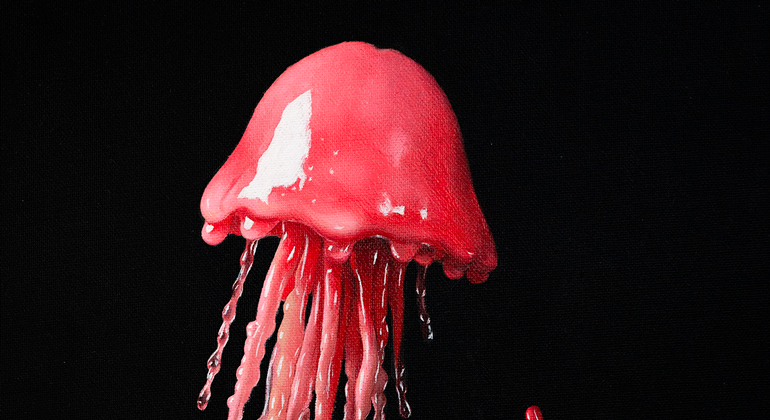
Each piece in the exhibition functions as an allegory, not because it represents, but because it condenses biopsychological content. At the same time, the presence of corals, fungi, and jellyfish introduces a hypersensual dimension that does not refer to narrative, but rather to sensitive matter lacking brain, heart, or bones. Life is offered in its most gelatinous condition, yet also in its most strange, urticating, even venomous form.
From this perspective, the paintings may be understood as an iconography of life in solidification: some forms remain fixed to the background, while others float and swim freely. They do not document natural processes, but reorganise them into a systasis (constitution) of forms in which time is retained and matter becomes symbolic. Nature no longer appears as landscape or environment, but as the formal condition of the constituted instant.
Thus, the natural character of that instant does not designate an ephemeral moment, but a point at which the temporal becomes imaginary and the living, in its suspension, reveals another structure — unexpected, biosensual. Within the liturgy of the process of arrest — precise, silent, radical — a space opens for a complicit gaze that lingers and delights.
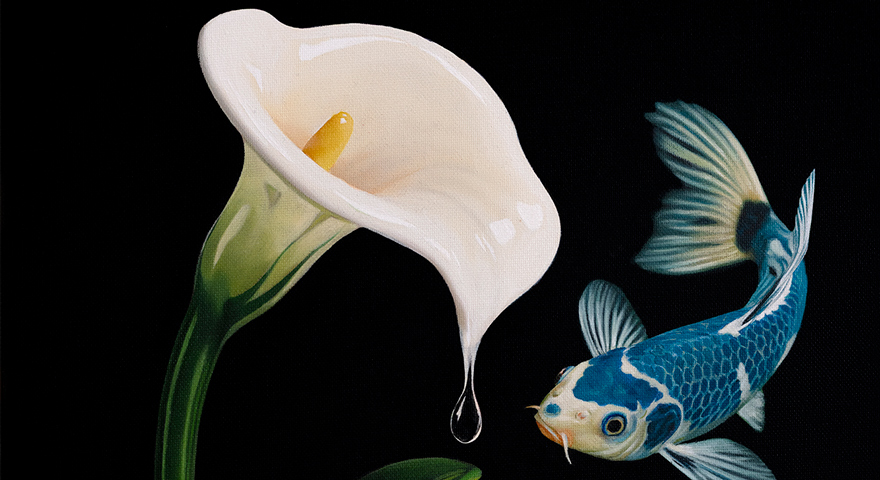
It is precisely here that the work lends itself to a denser symbolic reading. The fruit, the flower, or the humid surface cease to be merely forms and become poles of attraction, almost objects of desire. The discreet yet inevitable approach of the animal evokes a primordial scene: that of access to the forbidden, of the impulse that precedes all consciousness. Without any explicit gesture, the images suggest an elementary economy of desire, in which life orients itself towards that which calls to it. There is neither dramatisation nor guilt, yet there exists a ceremonial tension that recalls structures of pop visual culture, where nature, seduction, and the body have become inevitably intertwined.
Roberto Ballesteros
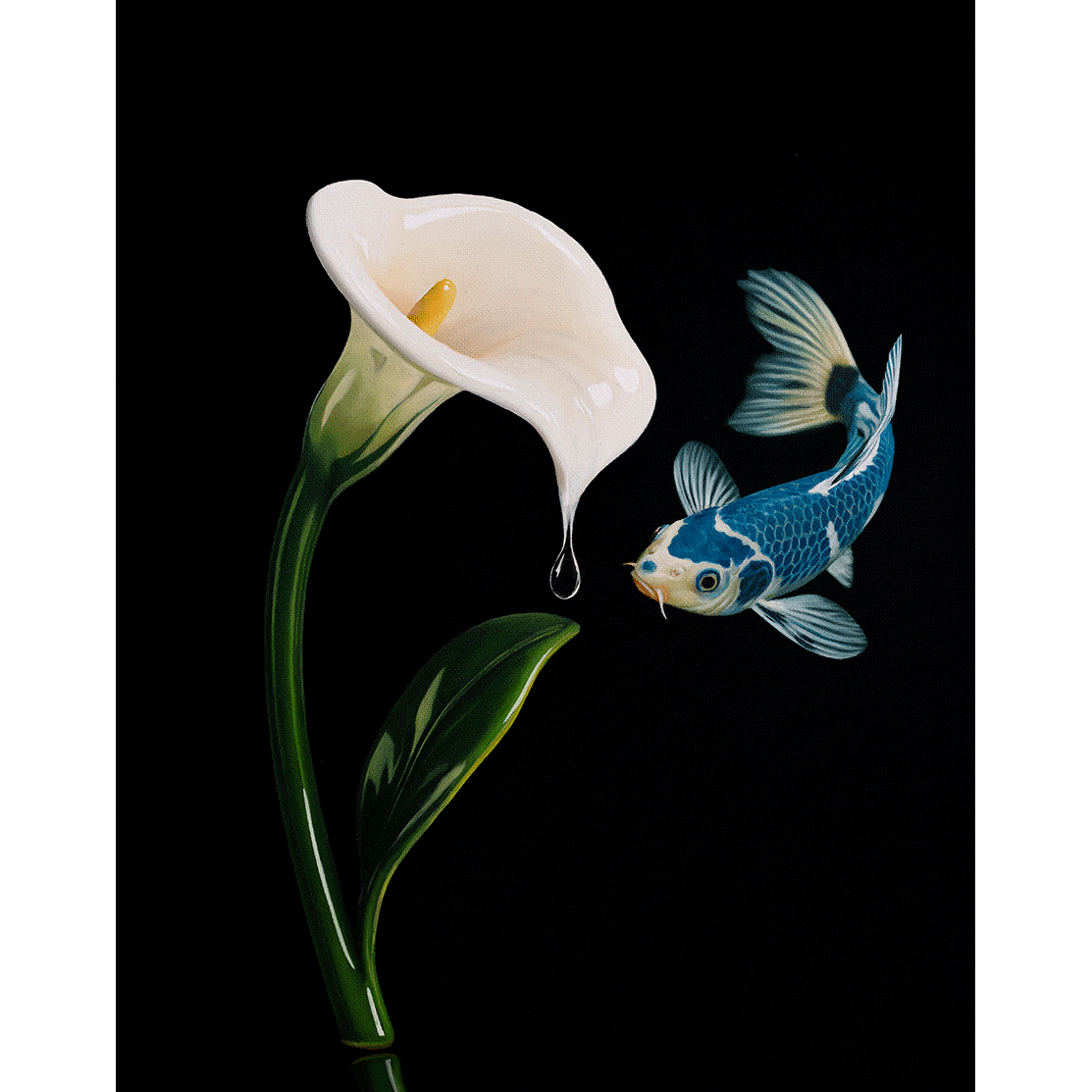
CALLA LILY WITH BLUE KOI
Oil on canvas
36 x 28 cm
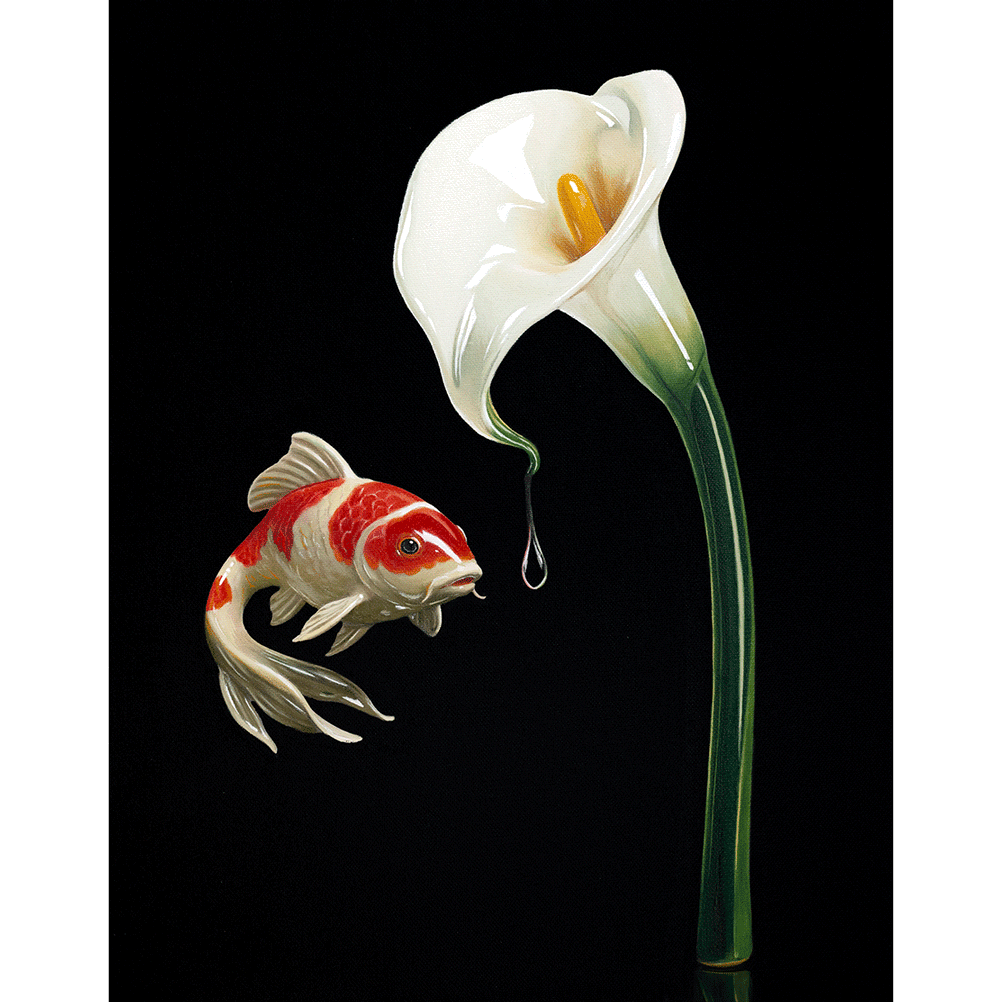
CALLA LILY WITH FISH
Oil on canvas
36 x 28 cm
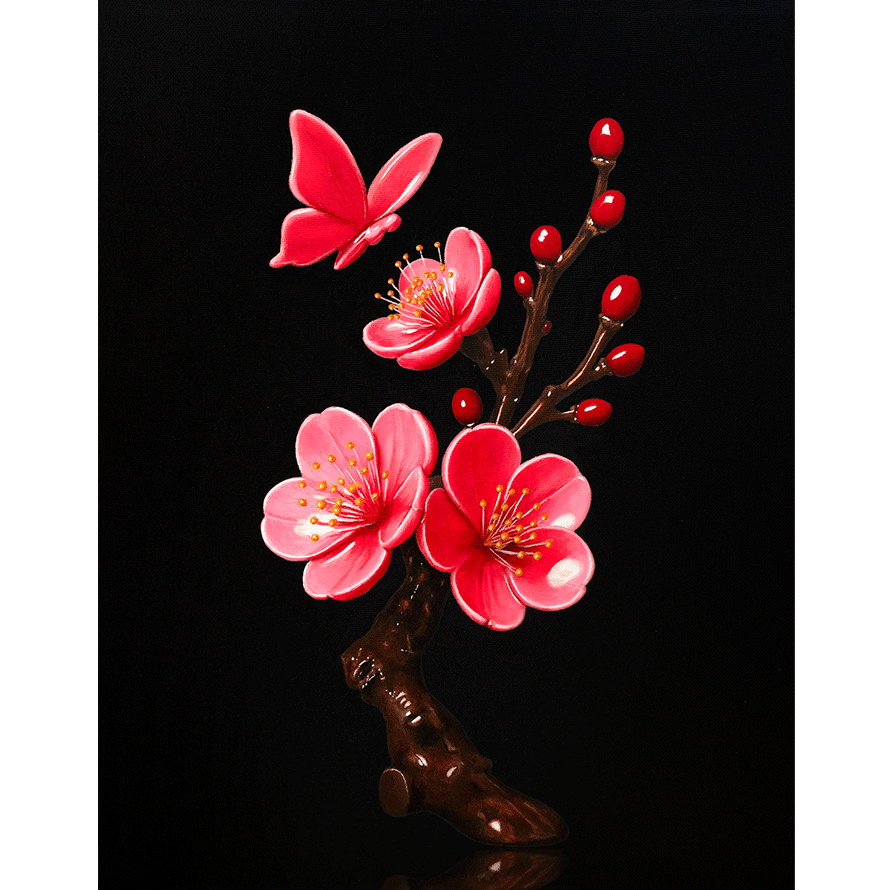
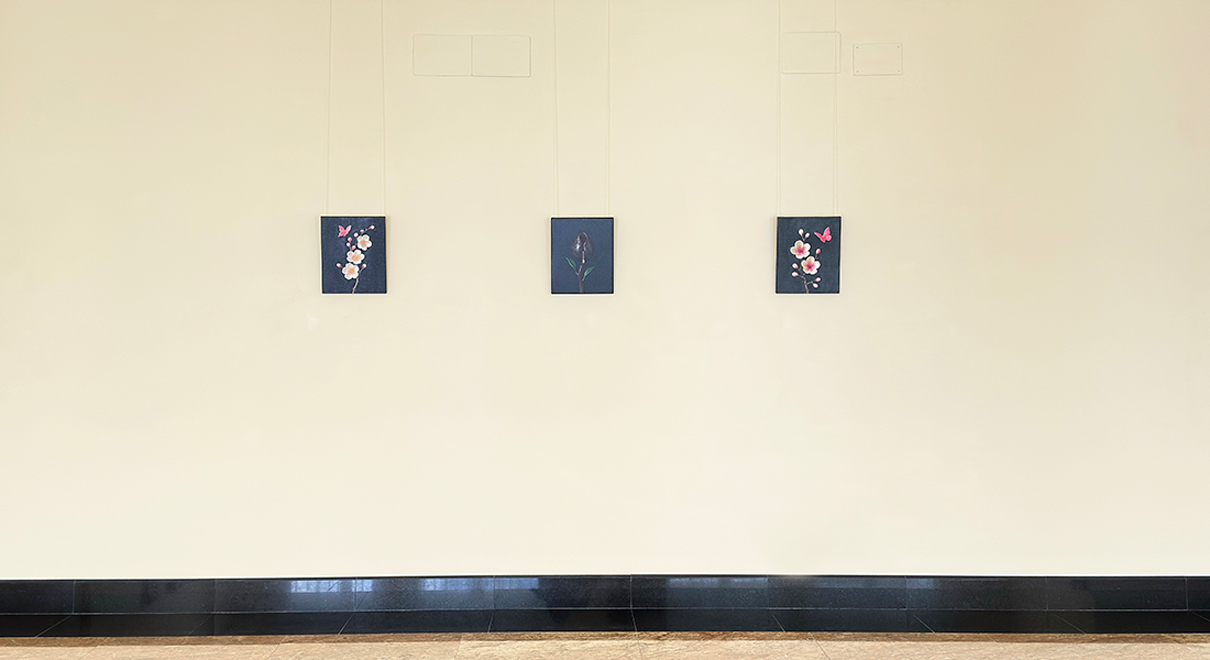
CHERRY BLOSSOM WITH BUTTERFLY
Oil on canvas
36 x 28 cm
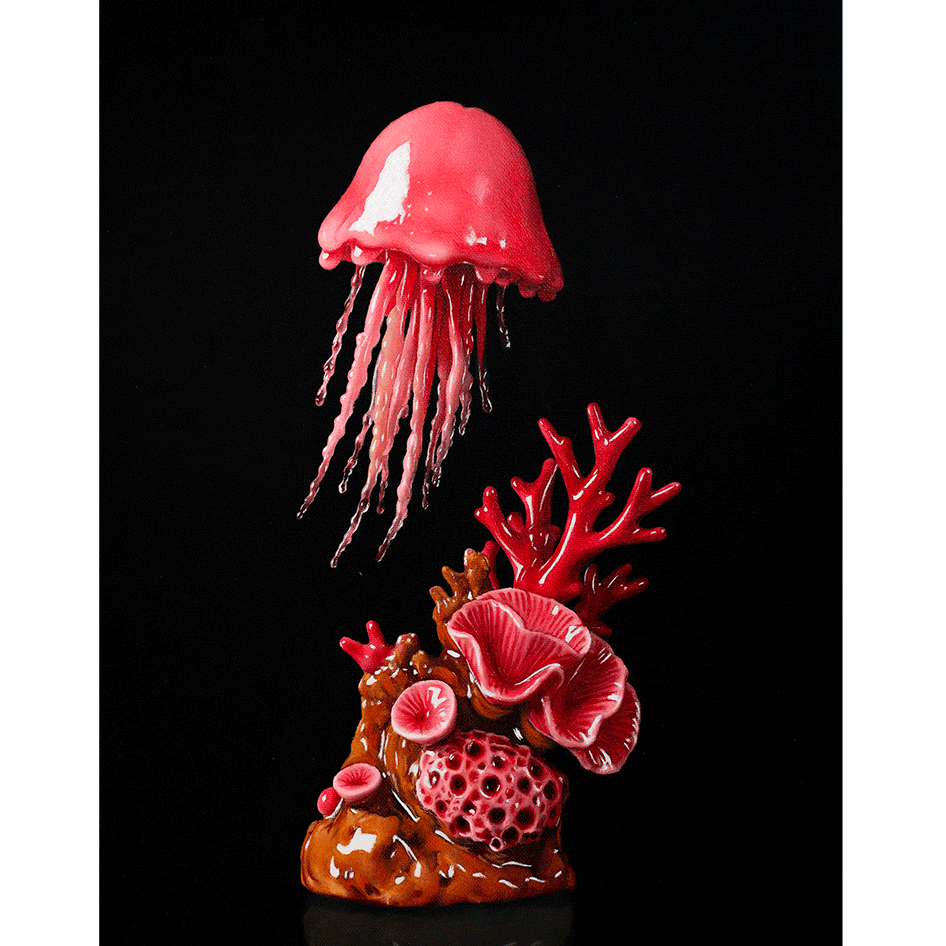
JELLYFISH AND PINK CORAL
Oil on canvas
36 x 28 cm
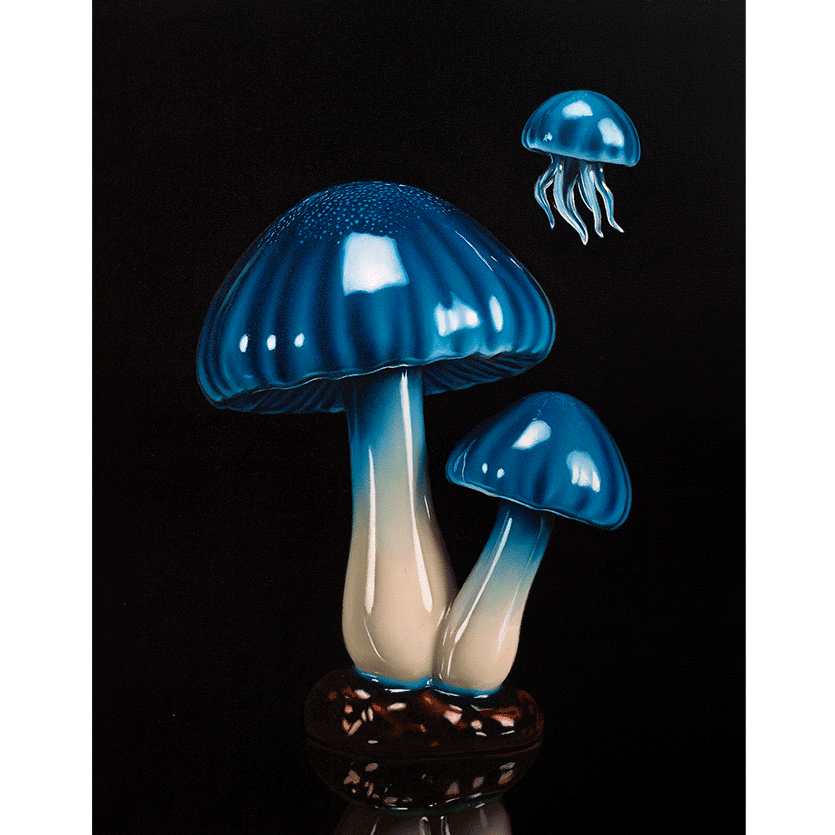
JELLYFISH AND BLUE MUSHROOMS
Oil on canvas
36 x 28 cm
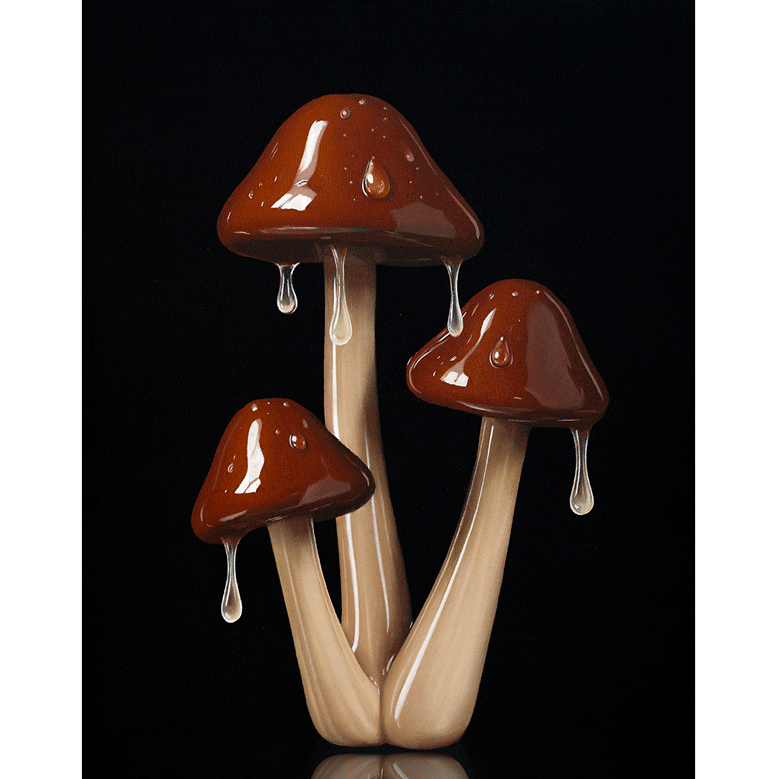
Oil on canvas
36 x 28 cm
