


UNDER THE SIGN OF SATURN
Solo exhibition of Spanish artist Diego Cerero, curated by Conchi Alvarez
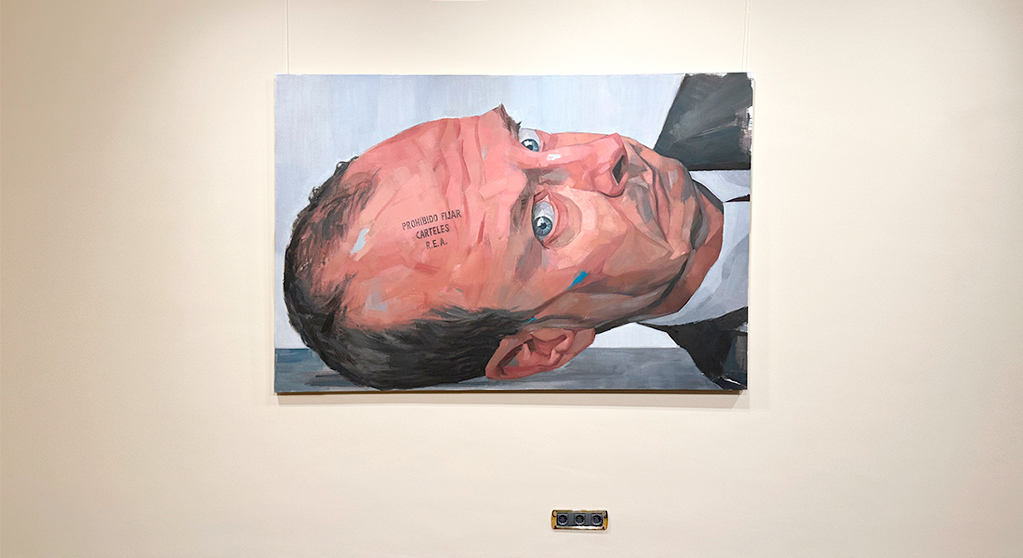
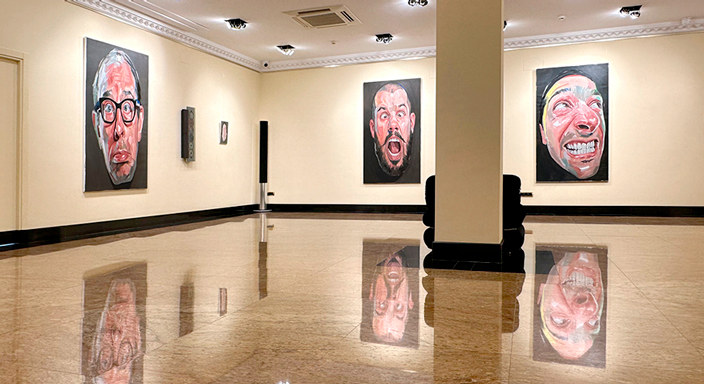
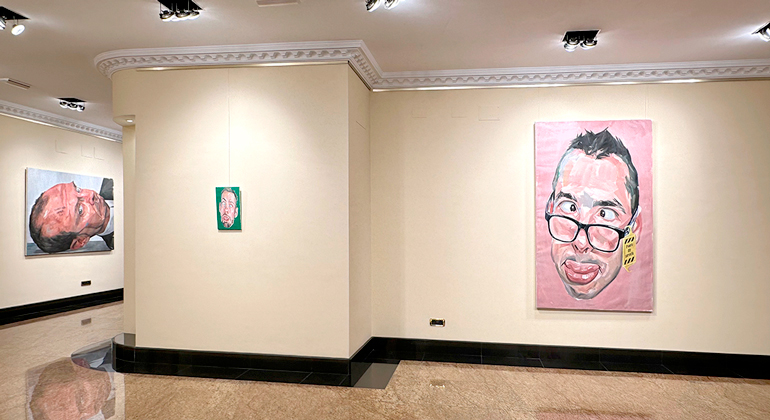
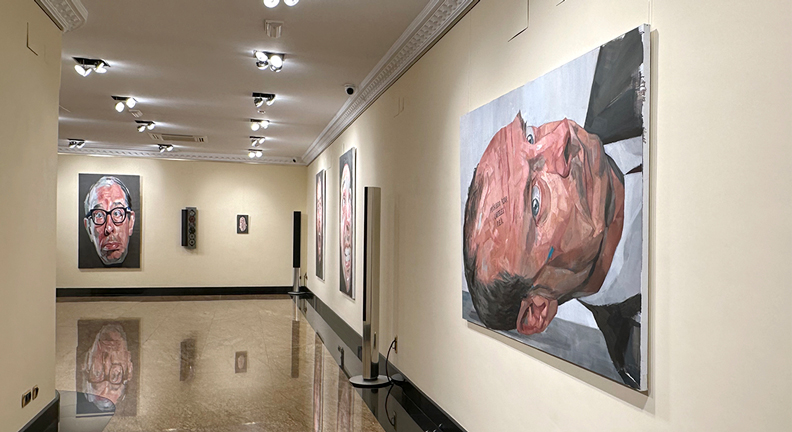
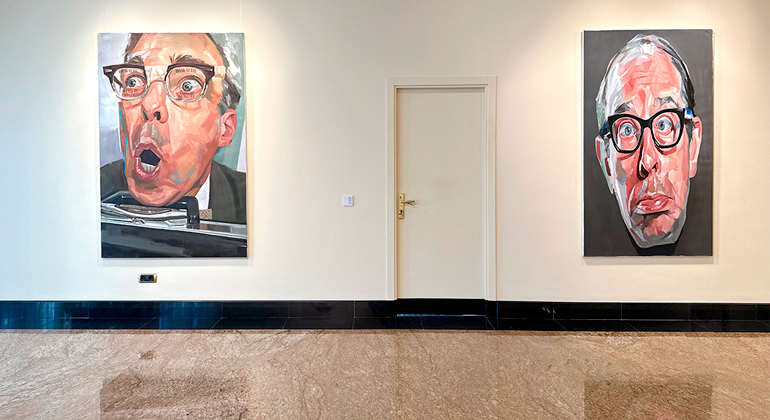
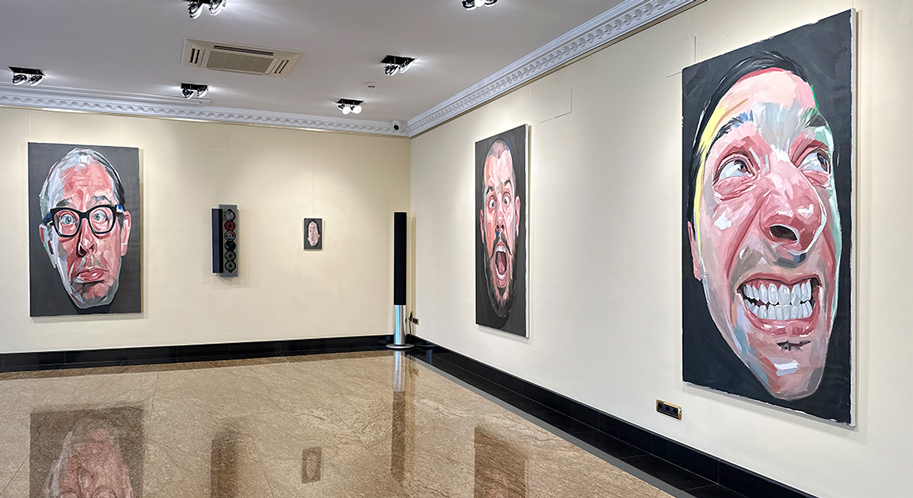
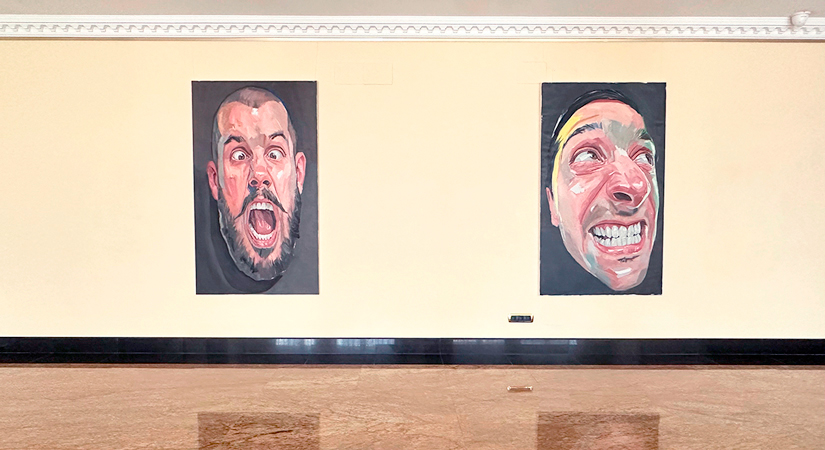
The paintings of Diego Cerero provoke an unstoppable magnetism. Never before has the portrait genre occupied the scenic space in our gallery in such an invasive way. The gallery of effigies that make up this exhibition draw us in and surprise us with the immensity of the pieces, but above all, the enormity of the heads that almost overflow the canvases. The artist uses a shocking composition in which there is only one element: the face, since the backgrounds are neutral and almost flat. Far the traditional portrait genre and even further from the classic canons, the new proportion that Diego proposes is a colossal head, almost two metres long, which would correspond to 14-meter human figure. This reduction of the bust, to only the head itself, transforms these canvases of cabezudos (traditional costumes with large heads) into a horror vacui that fill everything. Their gestures turn them into exaggerated caricatures, with grimaces and gestures from the realm of madness, but as “an aesthetic redemption of the ugly” as Rosenkranz would say, or as an example of the harmonious use of deformation, according to Umberto Eco.
These exaggerated mimicry faces convey a sarcastic message that leads us to wonder what is happening to Diego in the solitude of his study. What leads a creator to create these exorbitant beings? And the answer could be that he is one of those individuals “born under the sign of Saturn” as the title of the famous essay by Rudolf and Margot Wittkower says in which the artist is said to have some characteristics that normal people do not have. Most are melancholic in temperament, and it is Saturn, the mythological god, that determines that temperament. In ancient times it was thought that artists could go from the most sublime to situations bordering on madness. The renaissance Neo-Platonist, Marsilio Ficino believed that being melancholic was a divine gift, so with this, we could bet on this thesis as it has been common to classify artists or at least some of them as creatures of the world of Saturn. But no, in this exhibition, the theory is that it is not Diego who was born under the sign of Saturn, nor is he alienated, but that his portraits are gestated under the orbit of God.
To confirm this, it is sufficient to look through this iconographic gallery of countenance, to observe how they range in their mood from overemphasized astonishment to more or less serious idiocy, passing through individuals with exaggerated strabismus. Some of the paintings contain phrases that provide valuable clues to deduce their meaning. “Out of service” (hanging in the form of a tag on the temples of the glasses) is a merciless critique of our society´s assessment of mental illness and its treatment. “Forbidden to post R.E.A signs” (on a large face, lying on the floor) and “Break glass in case of emergency” (on the lenses of broken glasses, taped together and worn by a supposed business executive). All constitute an intelligent satire of some of the contradictions of the capitalist world.
The rest, those that do not have phrases, invite a more subjective interpretation, which in a Freudian key would imply that the repetition of these faces could be the failed attempt to return to a previous trauma to try to resolve it. And this is so not only because of the hyperbolization of the heads but also because almost all of them are expressly decapitated, without necks.

DIEGO CERERO

FIGURE
PROHIBITED POSTING POSTERS
Oil on linen
130 x 195 cm

FIGURE
BREAKING GLASS IN CASE OF EMERGENCY
Oil on linen
195 x 130 cm

FIGURE
OUT OF SERVICE
Oil on linen
195 x 114 cm

FIGURE 5
Oil on linen
195 x 114 cm

FIGURE 1
Oil on linen
195 x 114 cm

FIGURE 2
Oil on linen
195 x 114 cm

FIGURE 3
Oil on linen
41 x 24 cm

FIGURE 4
Oil on linen
41 x 24 cm