


05 Nov ART MIAMI 2025
2-7th of December
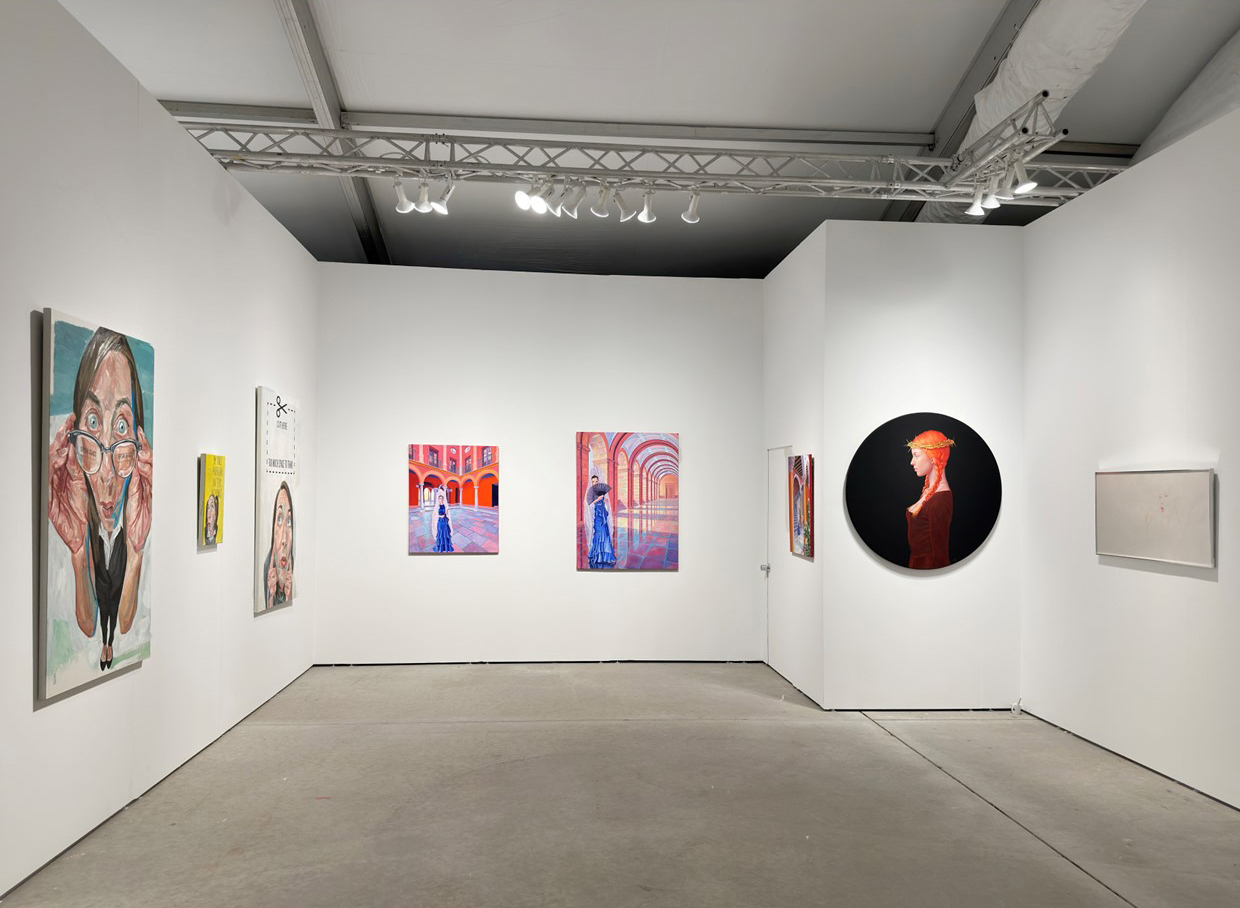
For Art Miami 2025, we are presenting a project curated by Roberto Ballesteros and Conchi Alvarez focusing on the female portrait and showcasing works by three Spanish artists: Salustiano, Conchi Alvarez, and Diego Cerero.
MIMESIS AND CREATIVITY
In the classical tradition, the famous dispute between Zeuxis and Parrhasius symbolized the power of mimesis —the first one deceiving the senses with grapes so lifelike that birds attempted to peck at them, the latter deceiving Zeuxis himself with a painted curtain that seemed to conceal a non-existent work—. In both cases, triumph resided in the technical mastery capable of seducing both the senses and the reason. However, Plato, in his Ion, awares us that art cannot be explained solely by the technique. The rhapsode—and with him, the artist—is driven by a divine force, an enthousiasmos that transforms him into an instrument of the transcendent. True art is not restricted to imitating reality; it transmits an energy that surpasses mere skill. Let us explore it in our triologue of artists.
The work of Salustiano embodies the legacy of the Neo-Renaissance female portrait. The idealization of youth and the hieratic restraint of the courtesans in Quattrocento Italian painting. With a powerful and expressive symbolic aesthetic, Love is Pop evokes its own distinctive style through the use of symbolism, drama, and minimalism in the setting. Yet, in this Zahara with a crown of thorns, by incorporating such a potent symbol, the artist transforms the immediate, the literal, into allegorical and poetic (from the Greek poiesis, ποίησις, “action, creation, fabrication”) substance. The beauty of the composition thus becomes a place of tension between the human and the divine, between earthly grace and transcendental sacrifice, granting the portrait with a new poetic substance. Between the delicacy of the face and the harshness of the thorns emerges a symbolic tension: the human confronted with the divine, the sanctified grace of feminine beauty pierced by the thorns of carnal suffering. In this dialectic, the painting presents itself as a portrait that, beyond the individual, embodies an archetype of spirituality and destiny shared by its kin.
In front, the portraits of Conchi Álvarez. The imposing presence of the woman in the indigo dress embodies a poetic substance connected to popular religiosity and cultural identity, presenting herself as an intimate subject, with a personal biography that transcends mere devotional archetypes, expressed in the flesh and materiality of the represented bodies, thus rooting the spiritual in concrete humanity. Here, the feminine stands as a living memory of an also shared tradition.
In the two works by Conchi Álvarez, the fan becomes a visual language of presence and authorship. When open, it suggests dialogue, seduction, and a conscious interaction with the viewer. When closed, it conveys introspection, reserve, and inner reflection. This duality allows the artist to modulate the relationship between the visible and the veiled, between the public and the private, demonstrating how the subject portrayed is not solely a figure, but a bearer of their own voice and conscious presence. At the same time, the fan serves as a bridge between tradition and modernity, evoking Spanish costumbrism, the elegance of the “mantilla” (traditional Spanish headpiece worn by women during religious and cultural ceremonies as a symbol of elegance and respect), and the codes of historical society, while the self-portrait reaffirms the autonomy and self-referential (own, singular) plane of the creator. Thus, each gesture, whether open or closed, becomes part of a complex visual poetics, where identity, cultural memory, and artistic awareness intertwine.
The white “mantilla” is a traditional Spanish accessory that has been worn for centuries, particularly on festive occasions. Its history is intricately linked to Spain’s cultural heritage, and its evolution reflects the social and aesthetic changes throughout time. In Andalusia, godmothers traditionally wear a white “mantilla”, symbolizing the significant role they play in the ceremony, and serving as a gesture of honor and respect towards the central figures of the event. Moreover, unlike other symbolic accessories that may fall out of fashion, the white “mantilla” is timeless and enduring. This allegorical composition allows the artist to subtly and elegantly modulate the relationship between the visible and the veiled, between the public and the private.
Beside them, the paintings of Diego Cerero. These striking works constitute the third counterpoint of the exhibition, articulating a contemporary and provocative approach to the “eternal feminine”,’ one that is “aesthetically incorrect”. His large-format canvases dominate the space with intensity, using daring visual perspectives, dramatic low-angle shots, and faces with oversized eyes that fill the frame, creating an immediate presence and direct connection with the viewer. The inclusion of the phrase “In case of emergency break glass”, inscribed on glasses or magnifying lenses, introduces a conceptual play that blends irony, urgency, and reflection on the fragility of action in contemporary life. The feminine, thus, becomes both a poetic and political principle, where aesthetics and social concerns converge.
Cerero presents the female figure within neo-expressionist cultural contexts, marked by intense social unrest. His work operates on both a literal and expressive plane, inheriting elements from pop art, comic, and cinematic comedic imagery, where the executive woman asserts her power to choose, her reivindicatory strength, and her activist visual poetics. Every gesture, glance, and constructive detail is meticulously designed to engage the viewer, creating an experience that blends complicity, tension, and social narrative. In doing so, Cerero positions himself as an artist who bridges the pictorial with the symbolic and sociopolitical, proposing a reflection on the feminine presence in contemporary art and the globalized visual culture, within a very timely and relevant nematological discourse for our ongoing present.
This exhibition, as you can see, delves deeply into various interconnected visions of the feminine. The allegorical re-idealization of the Renaissance classical world, the Neoclassical sobriety, and the Spanish costumbrism, together with the fast-paced and interconnected nature of contemporary life, engage in a dialogue between tradition and the present, combining gesture, composition, and symbolism to express identity, autonomy, and poetic substance. Together, they reveal an artistic domain in which the feminine is established as a conceptualized visual presence, capable of linking the past, the present, and contemporaneity in a plural and coherent discourse. Collectively, the three artists demonstrate how the presence of women in these works can articulate various forms of mythopoetic (creative) essentiality, being at once classical, traditional, and contemporary, yet with modulations ranging from the intriguing to the suggestive, and from there to the commercial.
Roberto Ballesteros

SALUSTIANO

LOVE IS POP. Zahara with crown of thorns. Det.
Oil on canvas. Year 2025
Tondo 118 cm/46,5 inches
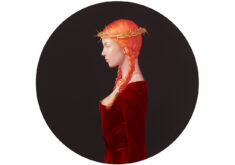
LOVE IS POP. Zahara with crown of thorns
Oil on canvas. Year 2025
Tondo 118 cm/46,5 inches
The work of Salustiano embodies the legacy of the Neo-Renaissance female portrait. The idealization of youth and the hieratic restraint of the courtesans in Quattrocento Italian painting. With a powerful and expressive symbolic aesthetic, Love is Pop evokes its own distinctive style through the use of symbolism, drama, and minimalism in the setting. Yet, in this Zahara with a crown of thorns, by incorporating such a potent symbol, the artist transforms the immediate, the literal, into allegorical and poetic (from the Greek poiesis, ποίησις, “action, creation, fabrication”) substance. The beauty of the composition thus becomes a place of tension between the human and the divine, between earthly grace and transcendental sacrifice, granting the portrait with a new poetic substance. Between the delicacy of the face and the harshness of the thorns emerges a symbolic tension: the human confronted with the divine, the sanctified grace of feminine beauty pierced by the thorns of carnal suffering. In this dialectic, the painting presents itself as a portrait that, beyond the individual, embodies an archetype of spirituality and destiny shared by its kin.

DIEGO CERERO

BREAK GLASS. Det.
Oil on linen 2025
162 x 97 cm/63,8 x 38,2 inches

BREAK GLASS
Oil on linen 2025
162 x 97 cm/63,8 x 38,2 inches
Beside them, the paintings of Diego Cerero. These striking works constitute the third counterpoint of the exhibition, articulating a contemporary and provocative approach to the “eternal feminine”,’ one that is “aesthetically incorrect”. His large-format canvases dominate the space with intensity, using daring visual perspectives, dramatic low-angle shots, and faces with oversized eyes that fill the frame, creating an immediate presence and direct connection with the viewer. The inclusion of the phrase “In case of emergency break glass”, inscribed on glasses or magnifying lenses, introduces a conceptual play that blends irony, urgency, and reflection on the fragility of action in contemporary life. The feminine, thus, becomes both a poetic and political principle, where aesthetics and social concerns converge.
Cerero presents the female figure within neo-expressionist cultural contexts, marked by intense social unrest. His work operates on both a literal and expressive plane, inheriting elements from pop art, comic, and cinematic comedic imagery, where the executive woman asserts her power to choose, her reivindicatory strength, and her activist visual poetics. Every gesture, glance, and constructive detail is meticulously designed to engage the viewer, creating an experience that blends complicity, tension, and social narrative. In doing so, Cerero positions himself as an artist who bridges the pictorial with the symbolic and sociopolitical, proposing a reflection on the feminine presence in contemporary art and the globalized visual culture, within a very timely and relevant nematological discourse for our ongoing present.

CONCHI ALVAREZ

PATIO HERRERIANO. Det.
Oil on linen. Year 2025
130 x 97 cm/51,2 x 38,2 inches
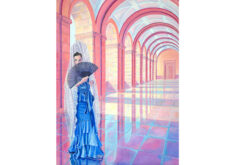
PATIO HERRERIANO
Oil on linen. Year 2025
130 x 97 cm/51,2 x 38,2 inches
In front, the portraits of Conchi Álvarez. The imposing presence of the woman in the indigo dress embodies a poetic substance connected to popular religiosity and cultural identity, presenting herself as an intimate subject, with a personal biography that transcends mere devotional archetypes, expressed in the flesh and materiality of the represented bodies, thus rooting the spiritual in concrete humanity. Here, the feminine stands as a living memory of an also shared tradition.
In the two works by Conchi Álvarez, the fan becomes a visual language of presence and authorship. When open, it suggests dialogue, seduction, and a conscious interaction with the viewer. When closed, it conveys introspection, reserve, and inner reflection. This duality allows the artist to modulate the relationship between the visible and the veiled, between the public and the private, demonstrating how the subject portrayed is not solely a figure, but a bearer of their own voice and conscious presence. At the same time, the fan serves as a bridge between tradition and modernity, evoking Spanish costumbrism, the elegance of the “mantilla” (traditional Spanish headpiece worn by women during religious and cultural ceremonies as a symbol of elegance and respect), and the codes of historical society, while the self-portrait reaffirms the autonomy and self-referential (own, singular) plane of the creator. Thus, each gesture, whether open or closed, becomes part of a complex visual poetics, where identity, cultural memory, and artistic awareness intertwine.
The white “mantilla” is a traditional Spanish accessory that has been worn for centuries, particularly on festive occasions. Its history is intricately linked to Spain’s cultural heritage, and its evolution reflects the social and aesthetic changes throughout time. In Andalusia, godmothers traditionally wear a white “mantilla”, symbolizing the significant role they play in the ceremony, and serving as a gesture of honor and respect towards the central figures of the event. Moreover, unlike other symbolic accessories that may fall out of fashion, the white “mantilla” is timeless and enduring. This allegorical composition allows the artist to subtly and elegantly modulate the relationship between the visible and the veiled, between the public and the private.