THE OTHER TREES OF EDEN


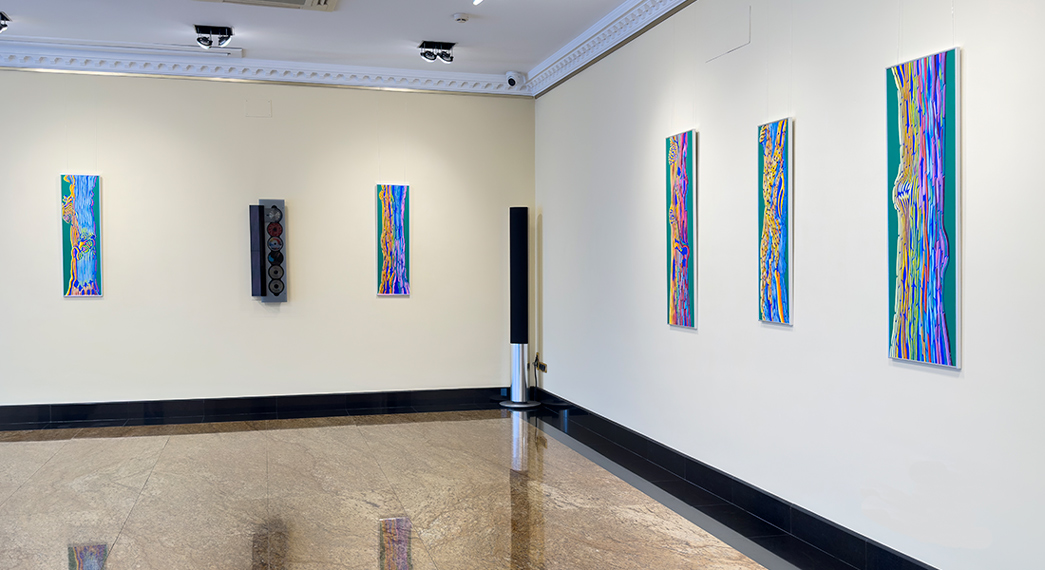
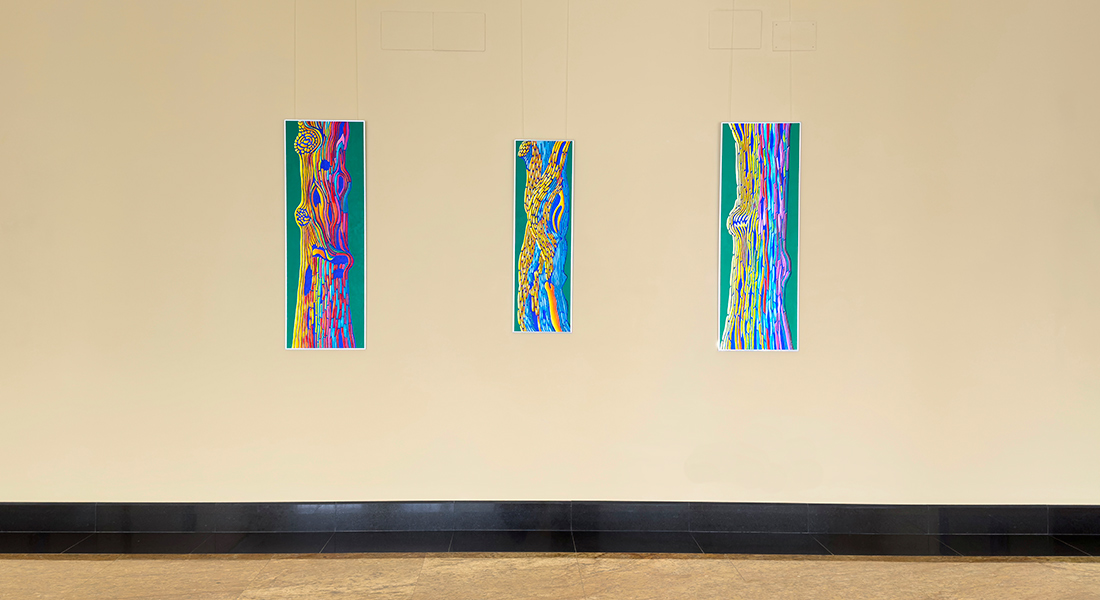
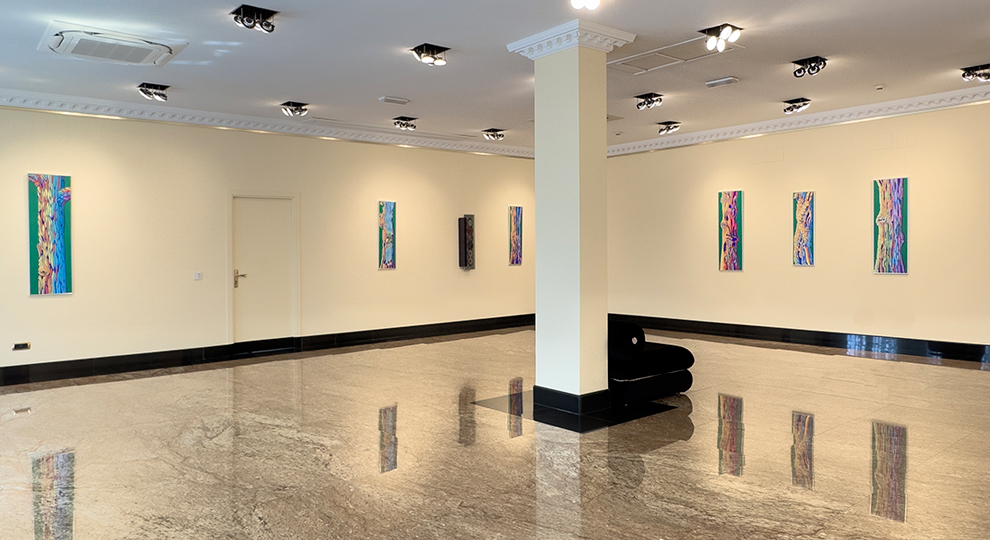
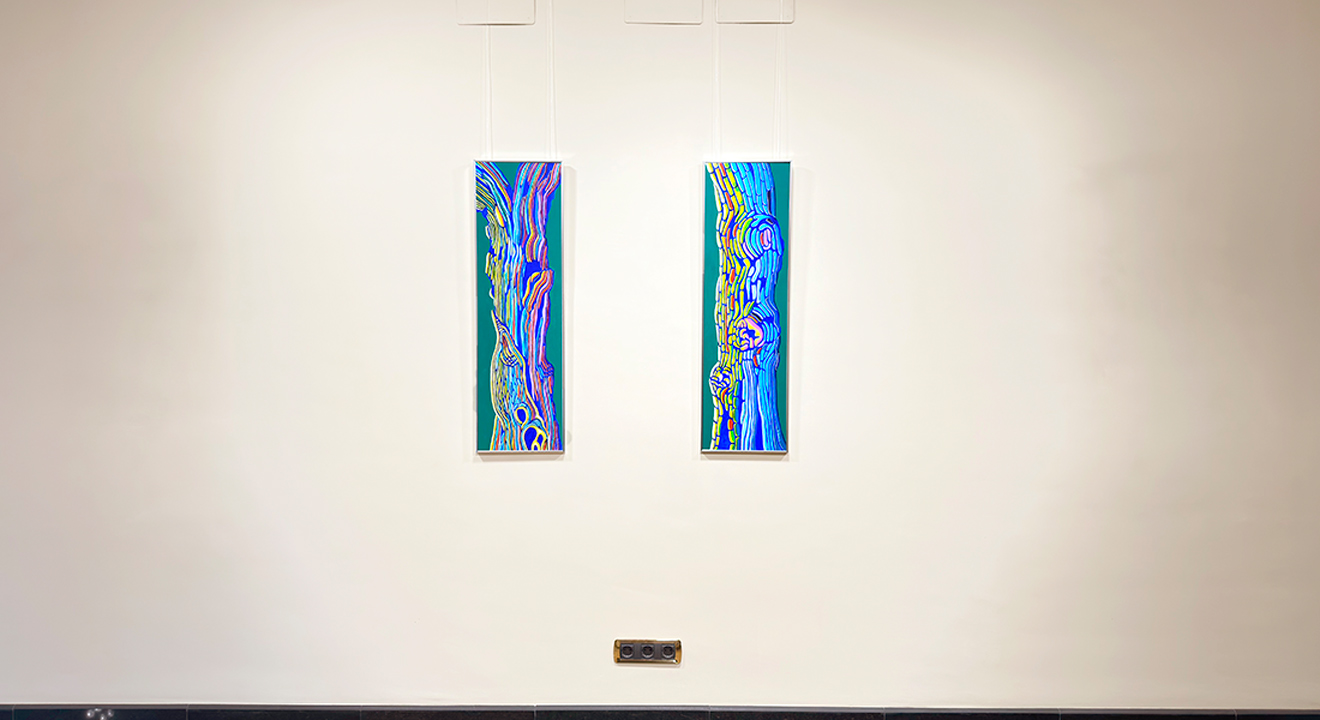
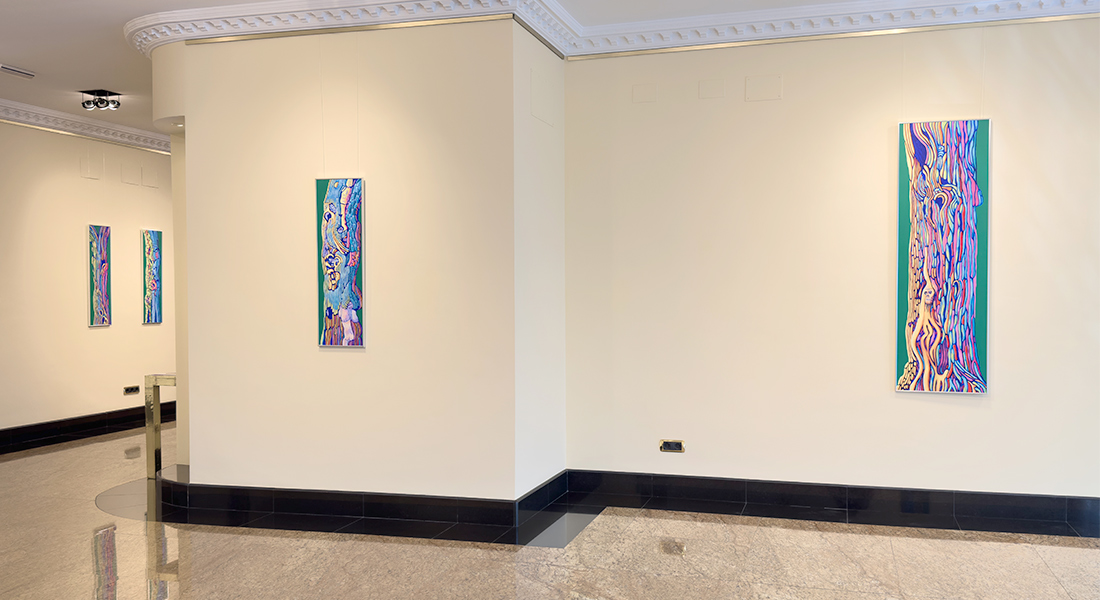
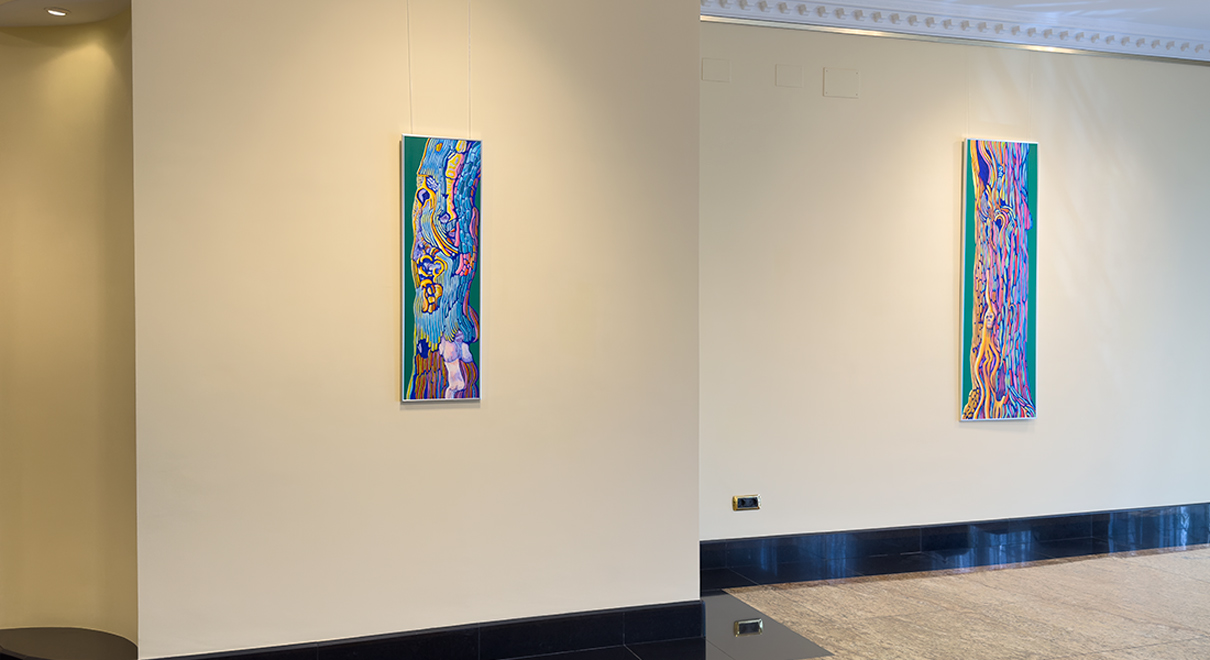
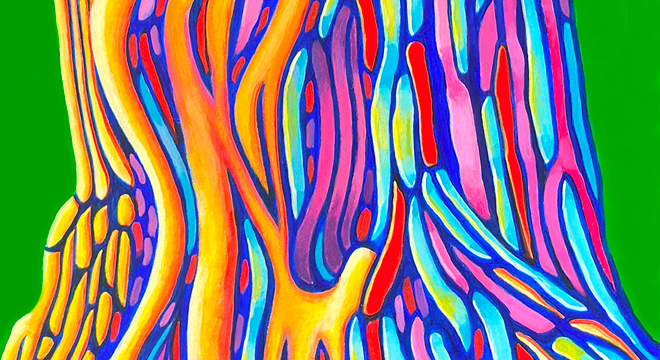
The Other Trees of Eden is the latest exhibition by the Spanish artist Conchi Álvarez, presented at STOA.
Continuing the collaborative approach that has characterized her recent exhibitions, the project has been curated by Roberto Ballesteros and Conchi Álvarez.
Conchi Álvarez is a Spanish artist and curator whose practice is distinguished by the rare convergence of historical scholarship and poetic intuition. Grounded in her academic training in Ancient History and Archaeology, her work unfolds as a form of metaphysical excavation. Rather than excavating the material remnants of the past, she probes the hidden strata of the human spirit, employing the canvas as a site where memory, myth, and enduring cultural archetypes are brought into dialogue with contemporary sensibility.
THE OTHER TREES OF EDEN
“And out of the ground the Lord God made to grow every tree that is pleasant to the sight and good for food; the Tree of Life also in the midst of the garden, and the Tree of the Knowledge of Good and Evil…”
The remarkable collection of trees Conchi Álvarez presents us is, unexpectedly, an artistic and exquisitely curated reconstruction of the forgotten vegetal inhabitants of the paradisiacal Garden of Eden. It is a remarkably perceptive choice when one considers how few painters throughout history have directed their gaze and artistic hands towards those other lesser mythological trees. One immediately thinks of the trees of Mondrian, Klee, Miró, or Kandinsky.
Universal History, written by humanity’s great illuminators and proclaimed by the prophets of the True Life, has traditionally reserved its attention for the imposing biblical allegories of the two sacred trees of Paradise, lost through Adam and Eve’s unforgivable sin and their disinherited descendants. Yet we know that every great work of painting is born of an obsession, and Conchi Álvarez’s has been, among many other blessings, the relentless pursuit of the light concealed beneath the outward appearance of things. It is not the sunlight that illuminates the world, but the one that emanates from within things themselves, from phenomena, once they have been contemplated patiently and attentively for a long time.
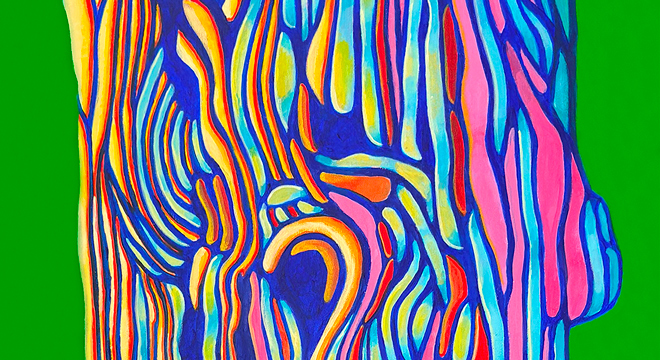
These Stoa trees, as you will see, do not belong to the plant kingdom as they are just an analogy. They are rather the outcome of a pycnological and pictological distillation of countless hours of silent observation and a constant determination to uncover the secret chromatic harmonies that emerge from the elusive natural essence of the extraordinary world that surrounds us. These are by no means arbitrarily painted trees, not at all, they are forms reconstructed through the painter’s synthetic memory, where the brushstroke ceases to describe in order to interpret, and colour abandons imitation in favour of revelation. Each trunk becomes a theatrical stage upon which an entirely new nature of the Edenic tree is premiered. The magnetic force achieved by every painting is so compelling that each establishes its own noematic identity—that is to say, an objective and trascendent artistic reality brought into being through the artist’s creative will.
The bark of the noema-tree becomes a cartography of experience accumulated over the years and, at times—if one may indulge in a Fray Luis-style hyperbaton—, through the generous gift of Life itself. Because that is precisely what happens. The illuminated woody patterns evoke pareidolias of wheat fields, floral configurations, vital warp and weft, a face, a river… perhaps even cities… although none of these has literally been painted, within every tree, as upon the spiral frieze of Trajan’s Column, the great battles of a conquered empire seem to unfold. Much illusion, effort and techique at the service of the pacient and dedicated art. Surely the quiet glory that awaits every humble artist cannot be far removed from so lucid a pictorical achievement.
Every work of art, or nearly every one, transforms the world that surrounds it, and wherever it comes into being, wherever it is embodied, it profoundly affects those who behold it, admire it, or reject it. Jacob von Uexküll describes it as Umwelt: the surrounding world uniquely inhabited by each living being and inaccessible to others. He illustratres this through the astonishing ethology of spiders, whose webs are woven with such extraordinary mastery that they transform the worlds of those who encounter them. Some become ensnared within the geometry of their forms, while others discover in them a sanctuary against greater dangers.
Conchi Álvarez’s Trees of Eden are, without question, threads spun from her own soul, and they will surely ensnare those who seek refuge in art as an escape from the prosaic worlds of everyday existence. Not because the nature of the tree itself has changed, but because our manner of seeing it has been transformed—our capacity to perceive and comprehend it enlarged. After experiencing this exhibition, it will be difficult to look upon the bark of a tree without wondering how many colours had previously remained invisible to us, how many forms had gone unnoticed, or how much beauty had merely awaited a gaze capable of discerning it. Conchi Álvarez’s painting does not add anything scientific to the natural trees, but instead, it offers the artist’s most generous gift: the power to transfigure habitual banality into something altogether different, acousmatic.
Nor is the arrangement of the exhibition within the gallery superficial or provocative, and visitors will perceive that every placement has been carefully considered by the artist. It is not surprising that the act of contemplating these paintings affects each viewer differently, ultimately inviting us to engage with the worlds they evoke, worlds that remain perpetually alert and suggestive.
Perhaps the true Paradise of these trees never dissapeared. Maybe it continues to grow silently wherever the human gaze succeeds in transforming nature into memory, memory into beauty, and beauty into a shared world. Conchi Álvarez’s trees belong that invisible forest. They are neither the Tree of Life nor the Tree of the Knowledge. They are simply the other trees that have waited for centuries until someone finally discovered that they also contained the light of a forgotten palimpsest.
Whether Conchi Álvarez should be regarded through this exhibition as a trees discoverer is for each visitor to decide. What is certain is that these Trees of Eden did not exist before she painted them. They are not ambiguous trees, they constitute a new artistic reality born of years of observation and interpretative work. The silva of the trunk is recreated so that its inner landscape may emerge. This, in my view, is the essential artistic truth revealed by these works, and I am convinced that when you leave the exhibition and once again pass by a tree in the street, you will no longer be capable of seeing it in the same way, because Conchi Álvarez’s work will have permanently transformed your way of looking, and that is perhaps the highest achievement to which any truly great exhibition can aspire.
Roberto Ballesteros
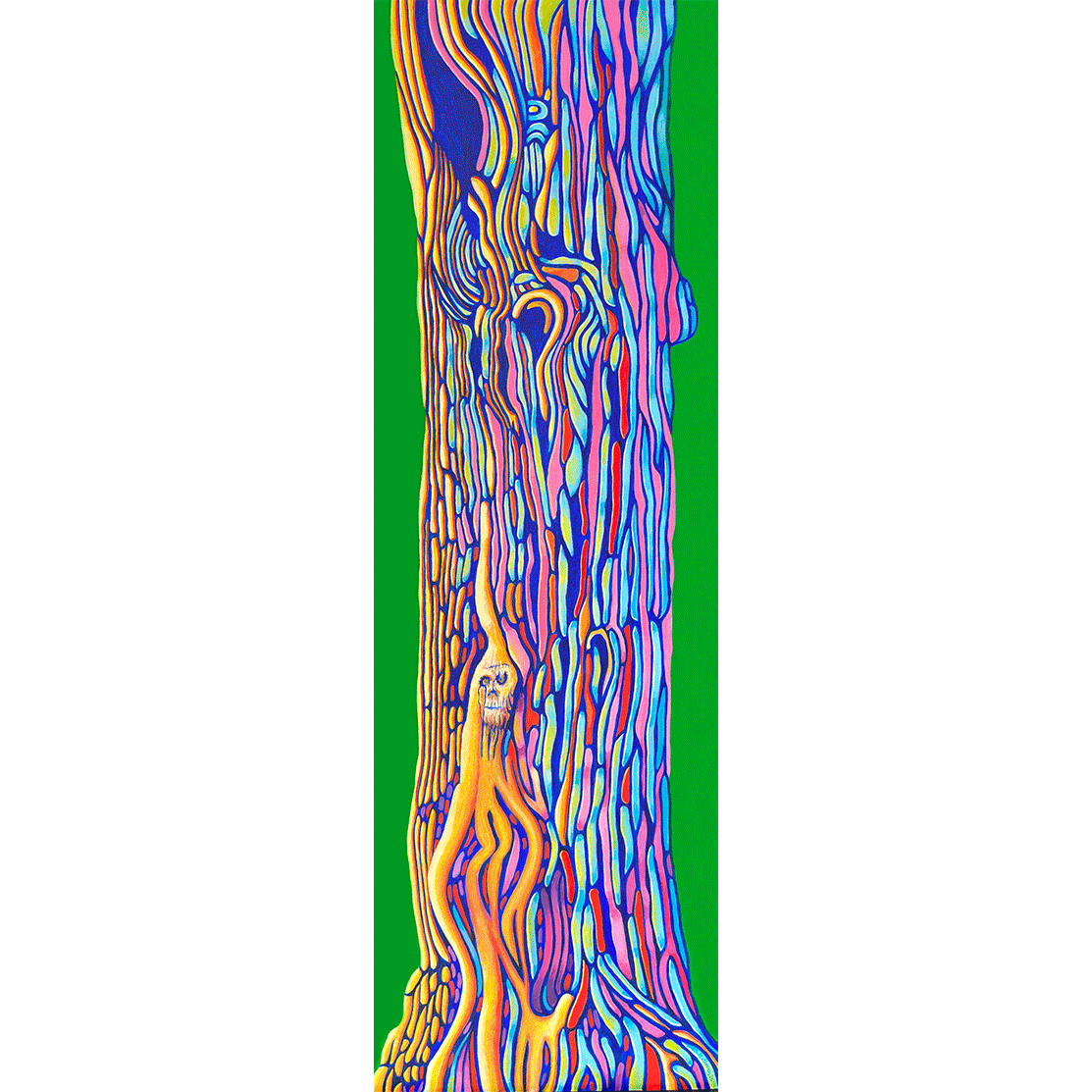
SABATINI TREE IV
Acrylic on panel
160 x 50 cm
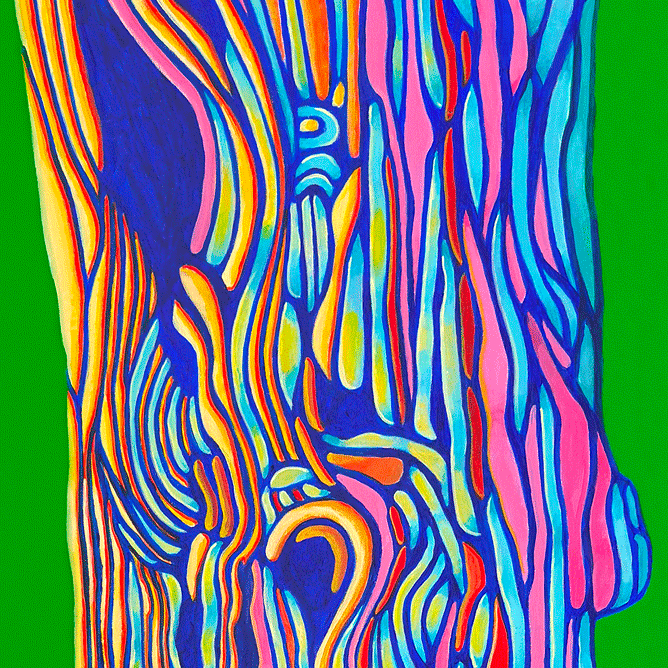
SABATINI TREE IV (det.)
Acrylic on panel
160 x 50 cm
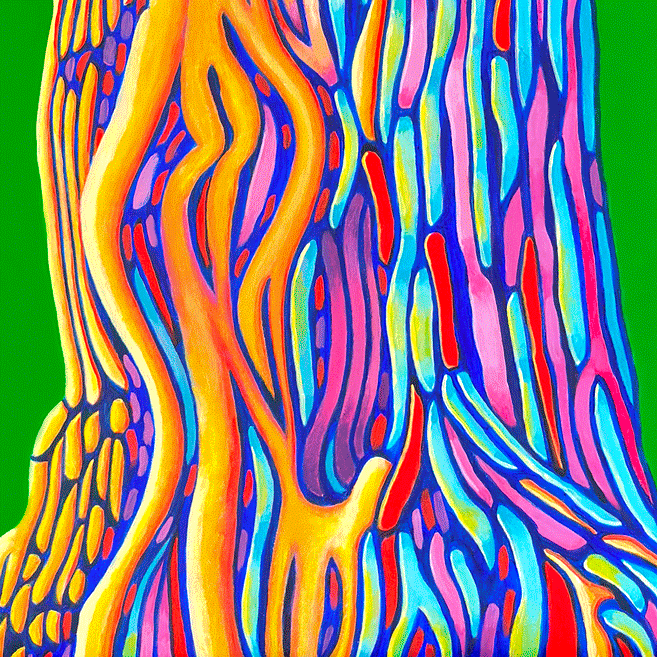
SABATINI TREE IV (det.)
Acrylic on panel
160 x 50 cm
SABATINI TREE IV (det.)
Acrylic on panel
160 x 50 cm
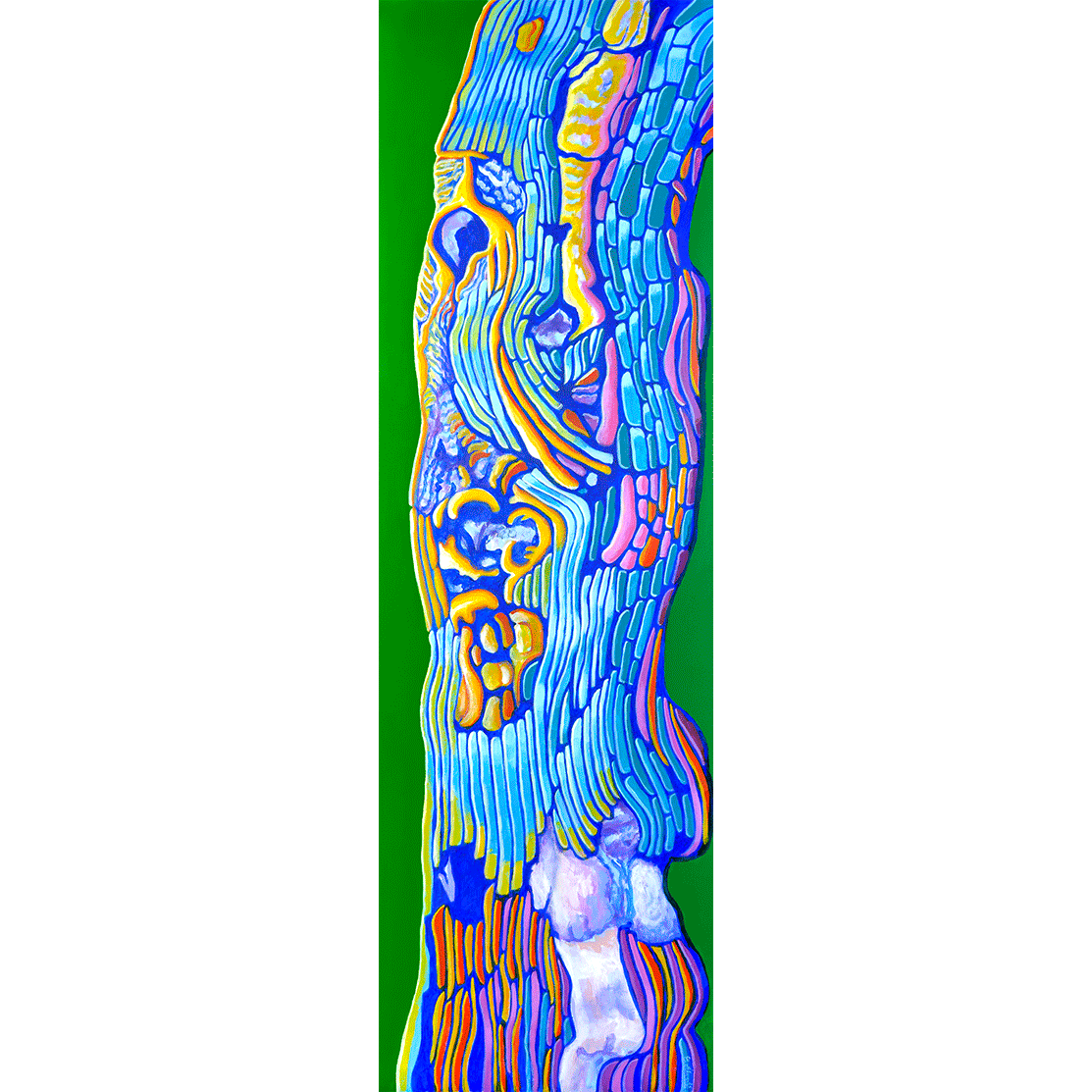
SABATINI TREE XIII
Acrylic on panel
100 x 30 cm
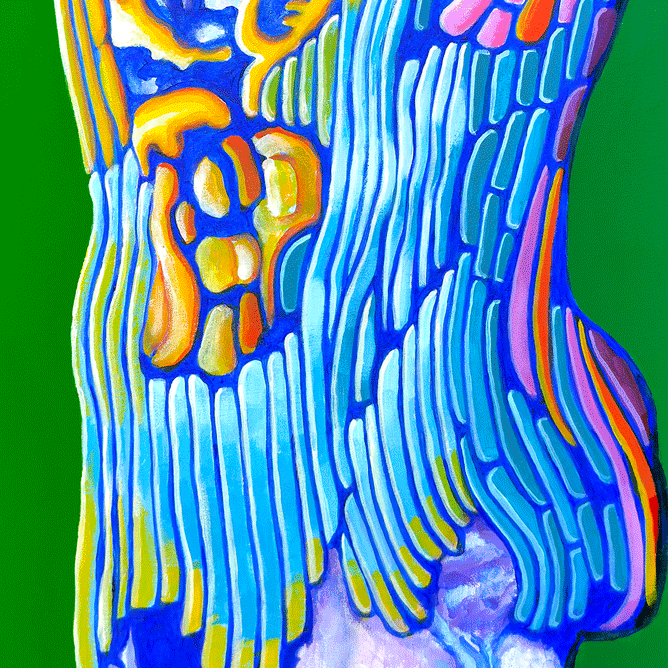
SABATINI TREE XIII (det.)
Acrylic on panel
100 x 30 cm
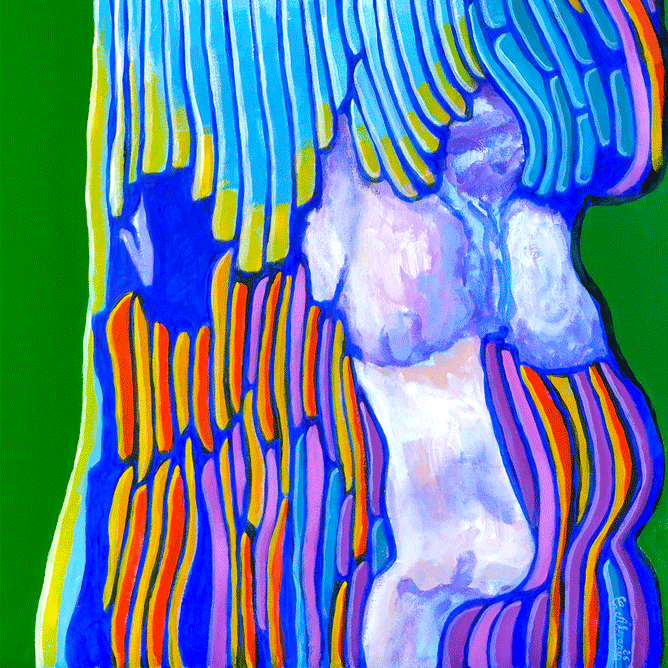
SABATINI TREE IV (det.)
Acrylic on panel
160 x 50 cm
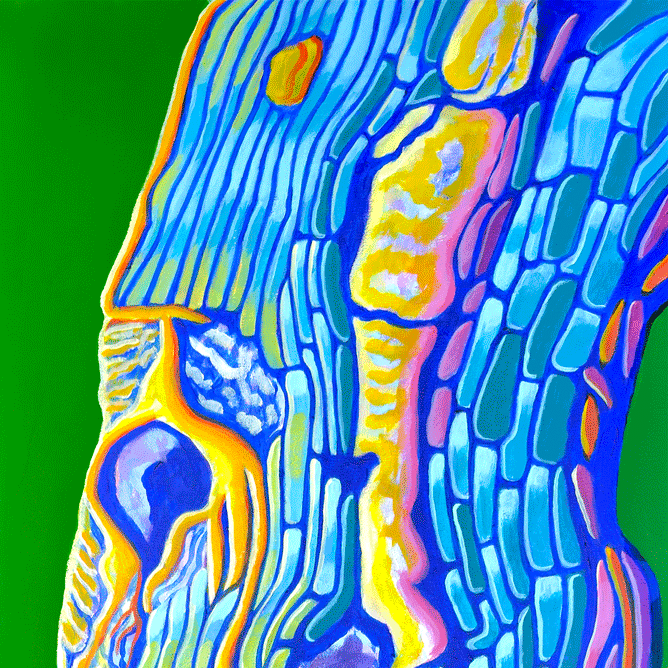
SABATINI TREE IV (det.)
Acrylic on panel
160 x 50 cm