WHILE THE CITY SLEEPS


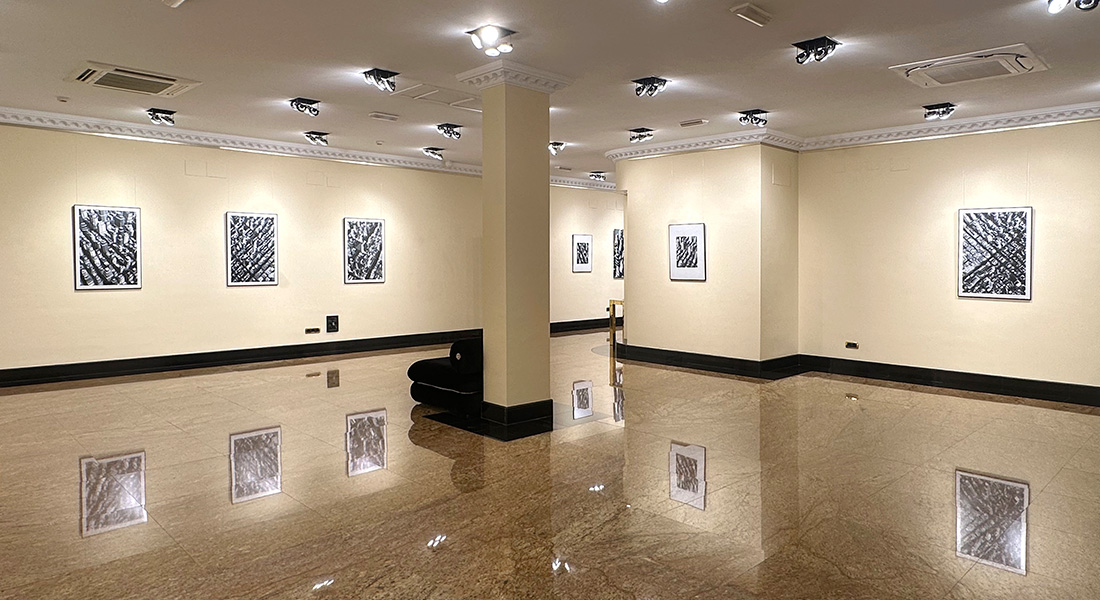
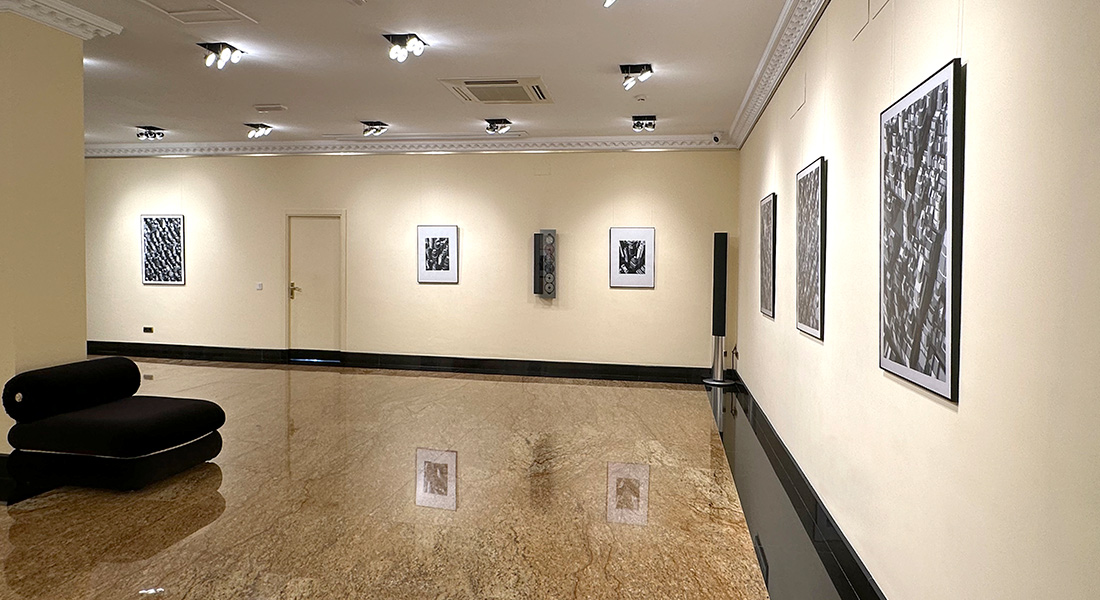
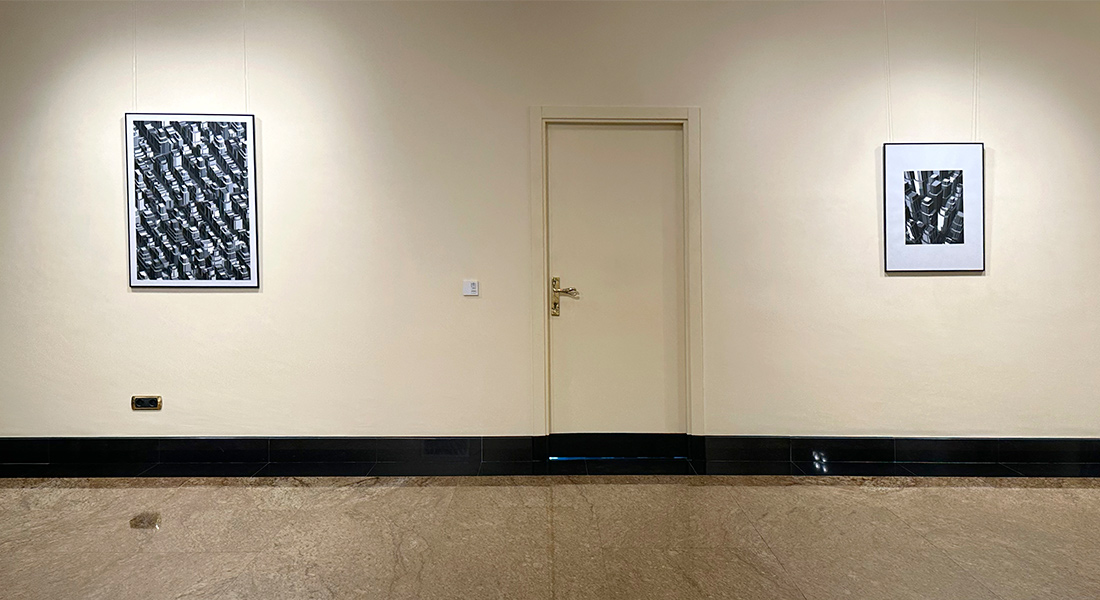
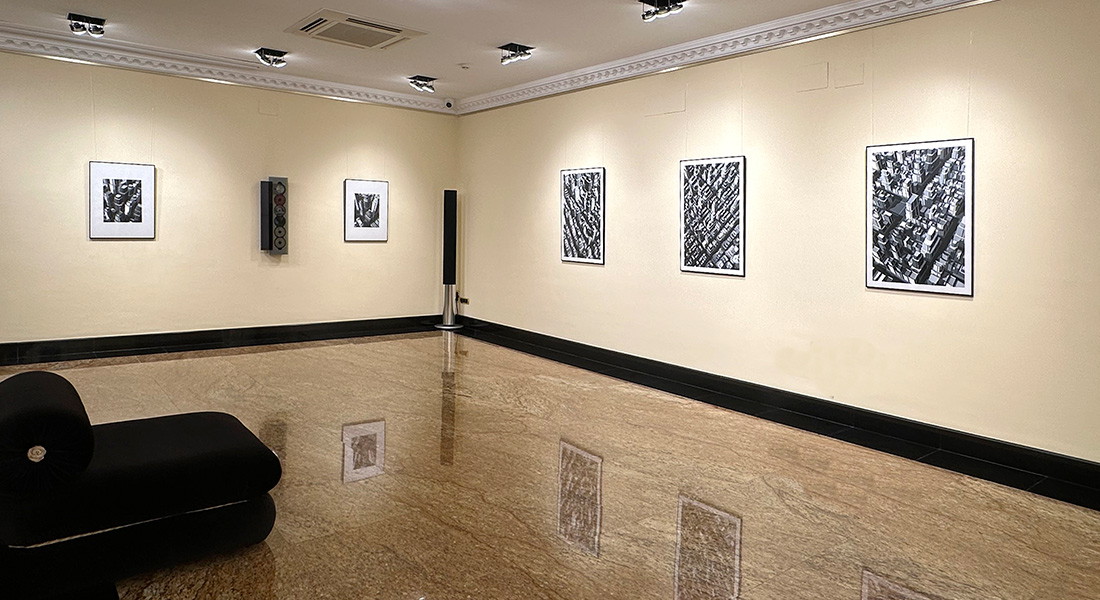
‘While the City Sleeps’ is Miguel Ángel Iglesias’s third solo exhibition at STOA.
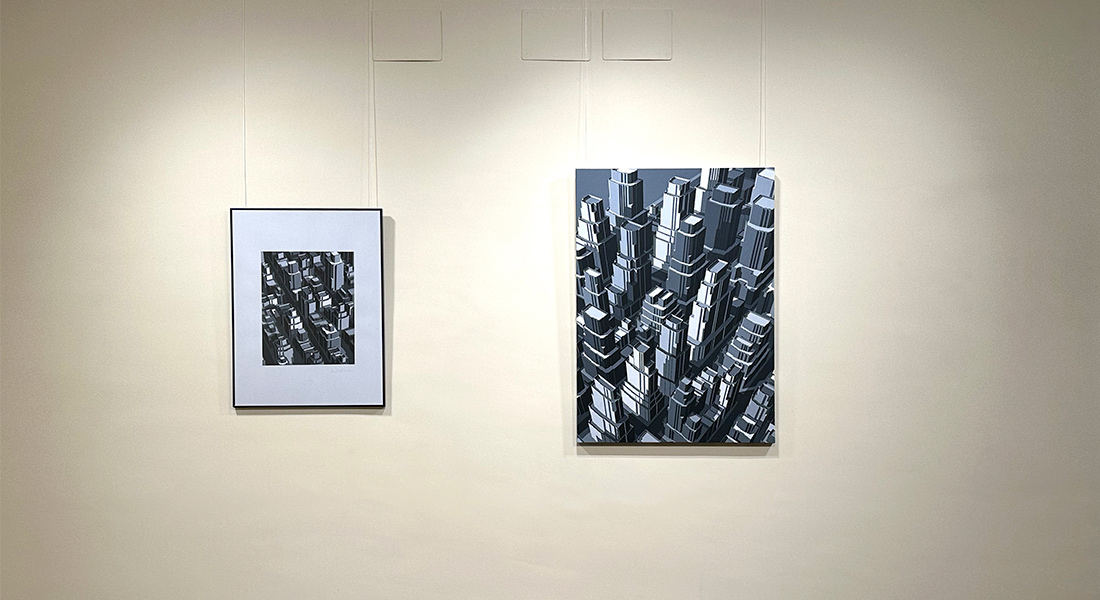
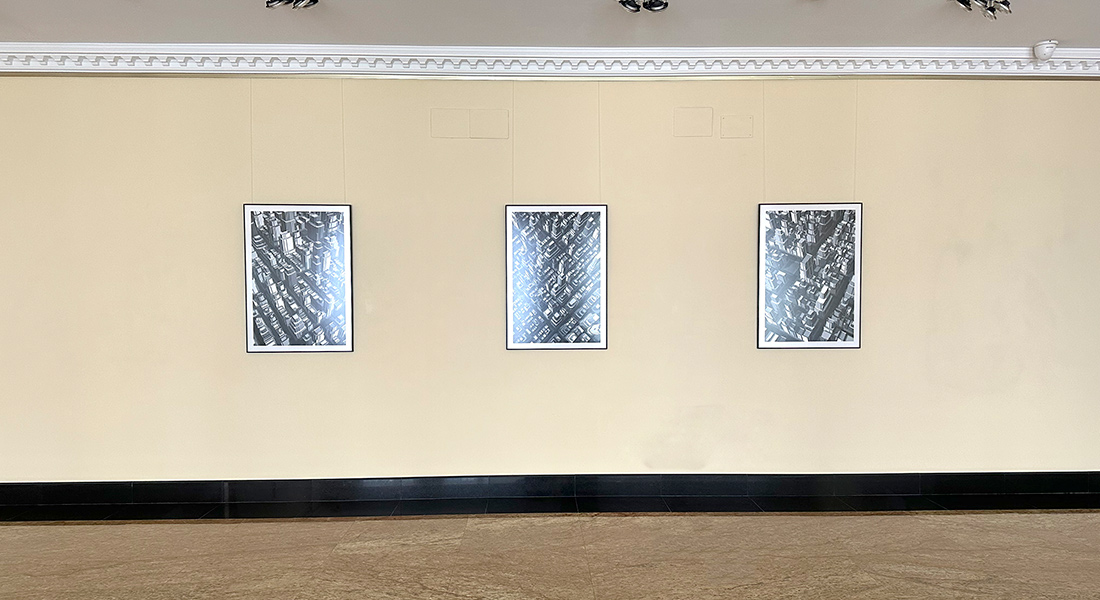
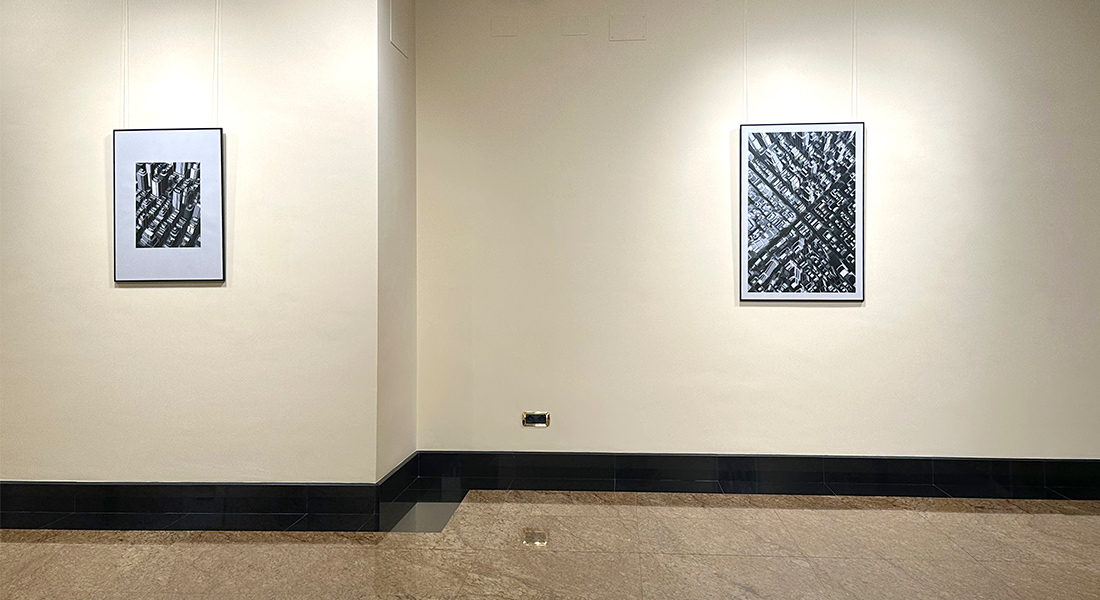
This time, our exhibition space showcases works executed in acrylic on both canvas and paper, his usual medium. All of the pieces use black and white paint, making them grisailles, and the theme is one that characterises Michelangelo’s work: the urban landscape.
The vision is heavenly: a bird’s-eye view that transports us to an imaginary plane about to land. At that moment, the artist’s gaze seeks out the skyscrapers of the downtown area of this ideal city, where human beings, automobiles and urban activity have disappeared and only these totemic sculptures of steel and cement remain.
WHILE THE CITY SLEEPS
Under the evocative title While the City Sleeps, the Stoa Gallery unveils its latest exhibition, presenting the works of Miguel Ángel Iglesias—pieces that not only conjure mystery and introspection, but also invite reflection on the delicate balance between progress and demographic sustainability. In slumber and desertion, the city reveals its soul—its artistic essence laid bare: a vulnerable terrain that speaks to us through silence. A visionary painter of urban sculptures, Iglesias immerses us in a sequence of urban landscapes caught in a figurative pause, where civic architecture transforms into totemic sculpture, into towering fetishes, into silent vessels of commercial intent and storage.
Drawing inspiration from the formal aesthetic of metaphysical painting, most notably the work of Giorgio de Chirico, Iglesias proposes the city as a mental landscape—a stage for an interior, timeless narrative. His vision dialogues with the legacy of plastic arts and the surrealist movements of the early avant-gardes of the last century, but also with the literary and visual imaginary of 1950s film noir and American hardboiled fiction, particularly the atmospheric worlds crafted by novelist Raymond Chandler. As in The Big Sleep or Double Indemnity, here the city is not a mere backdrop, but a protagonist in its own right—shadowed, deserted, saturated with invisible presences. Iglesias captures this atmosphere of latent tension and unresolved enigma, translating it into imagery where artificial light, projected shadows, and urban geometry construct a narrative devoid of characters, yet brimming with traces and abandoned scenes. The city sleeps, yet beneath its surface, questions stir. What remains when the lights of consumption, of traffic, of spectacle are extinguished? Iglesias responds with a form of painting that does not accuse, but suggests. In his works, the viewer becomes a detective—called to traverse the spaces with their gaze, to intuit what remains unseen, to listen for the echo of the unspoken. Each piece demands we bring our own life to it, our presence completing its silence. Thus, While the City Sleeps becomes a poetic intersection of allegorical film noir, postwar American literature, and German Expressionism—urging us to observe the city from its peripheries, in the moment when all seems still, yet everything continues to churn with nocturnal, passionate, and untamed life.
In While the City Sleeps, Miguel Ángel Iglesias offers a suspended vision of the metropolis—a seemingly forsaken realm, yet one marked by the fullness of what has been lived. Heir to the language of metamerica painting—beyond what is visible—his settings are not mere urban views, but deeply evocative mental territories where emptiness conveys more than what is seen. In this sense, Iglesias’s work aligns with the spirit of noir fiction authored by the greats of the thriller genre, where the city—like in The Long Goodbye or The Big Sleep—becomes a moral labyrinth, riddled with shadows, secrets, and solitude.
Likewise, his paintings resonate with the classic aesthetic of mythical noir cinema, especially two seminal works: The Asphalt Jungle (John Huston, 1950) and The Third Man (Carol Reed, 1949). In The Asphalt Jungle, the city is a stage where human fragility and ambition clash within a closed, nocturnal world fraught with suppressed tension. Iglesias seizes that atmosphere of elegant decay and tragic expectancy, and transfers it to canvas: solid structures, uninhabited; open spaces, sealed by absence. The urban becomes existential. Conversely, The Third Man introduces another dimension—that of postwar disillusionment, where Vienna’s ruins are not only architectural but moral. The city, traversed by oblique light and symbolic sewers, conceals truths only revealed in shadow. In Iglesias’s work, echoes of such deserted streets and subterranean tensions abound: his architectures, though clean and geometric, vibrate with the mystery of what once was and is no longer. His sleeping cities are not innocent; they are spaces imbued with the resonance of human presence—even in its vanishing. Thus, While the City Sleeps is a plastic, literary, and cinematic meditation on the city as symbolic stage. Iglesias does not narrate stories overtly, but leaves behind traces, atmospheres, and clues. Like a filmmaker or novelist, he composes open scenes in which the spectator must assume the role of observer, detective, and absent inhabitant.
Architecture and Class: The City as Vertical Hierarchy
Chicago— birthplace of the modern skyscraper and emblem of American urban dynamism—is far more than an architectural postcard. Its buildings do not merely define the skyline; they speak of power, inequality, history, and exclusion. Each structure, each street, each neighborhood reflects how social classes are distributed—and divided—within the urban fabric. In the glass towers soaring above, financial capital resides: executives, visible success, minimalist offices overlooking Lake Michigan, luxury condos, penthouses crafted for exclusivity and comfort. Verticality here is not only architectural, but symbolic: the higher one lives or works, the further one is from the ground—and from those who dwell upon it.
At street level, by contrast, pulse the rhythms of precarious labor, of transit, of the margins. In the southern and western suburbs—long relegated to African-American and Latino communities—the city fractures: less investment, more insecurity, deficient public services. There is architecture there as well, but not of steel and glass: there is brick, there is neglect, there is survival. This physical contrast expresses what sociologist Loïc Wacquant terms the urbanization of inequality: when the city itself becomes a visible map of social difference. In this context, buildings are not neutral—they are social markers. A housing block may speak of public policy, of disinvestment, of community; a skyscraper, of speculation, isolation, prestige.
To connect this sociological reading with art, as Miguel Ángel Iglesias does in While the City Sleeps, allows us to read the city as a stratified narrative—each façade holding stories of exclusion or privilege. In portraying silent, deserted cities, Iglesias does not erase social class; he renders it spectral, woven into the very fabric of architecture.
Roberto Ballesteros

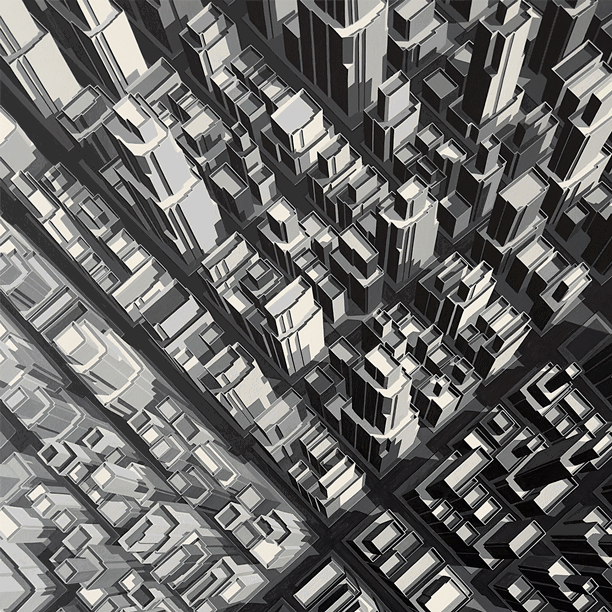
THE SQUARING OF THE CIRCLE. Detail
Acrylic on paper
100 x 70 cm
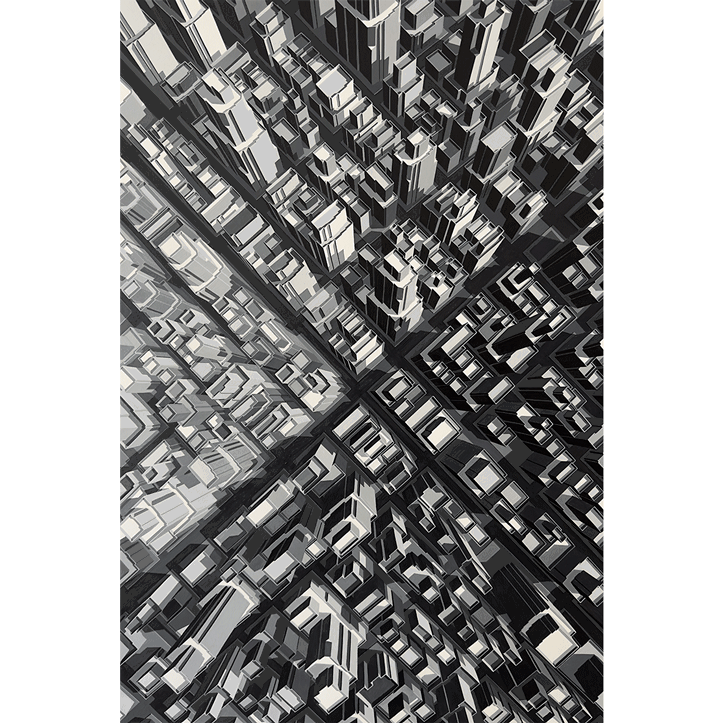
THE SQUARING OF THE CIRCLE
Acrylic on paper
100 x 70 cm
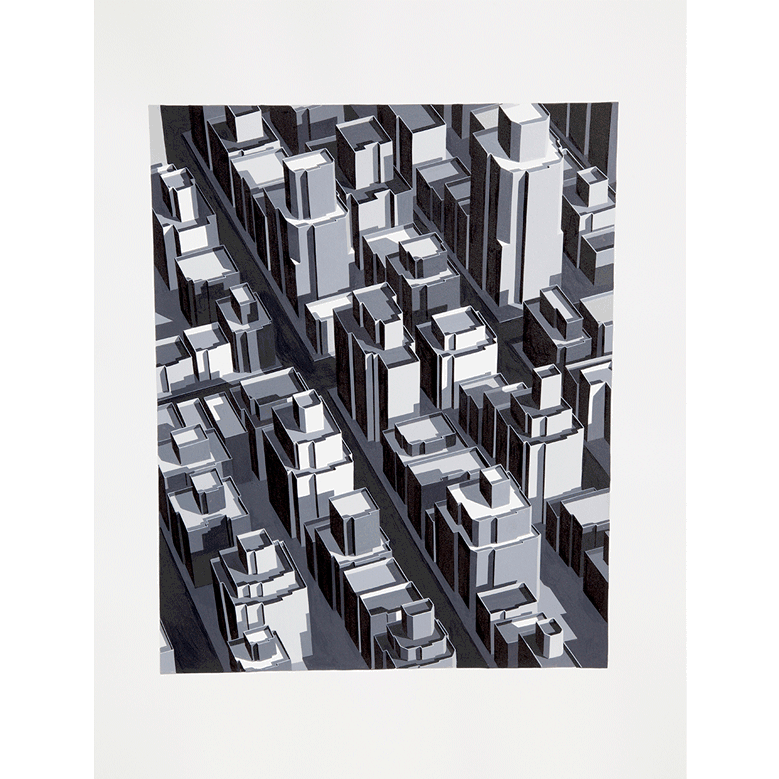
THE ETERNAL DREAM
Acrylic on paper
76 x 56 cm
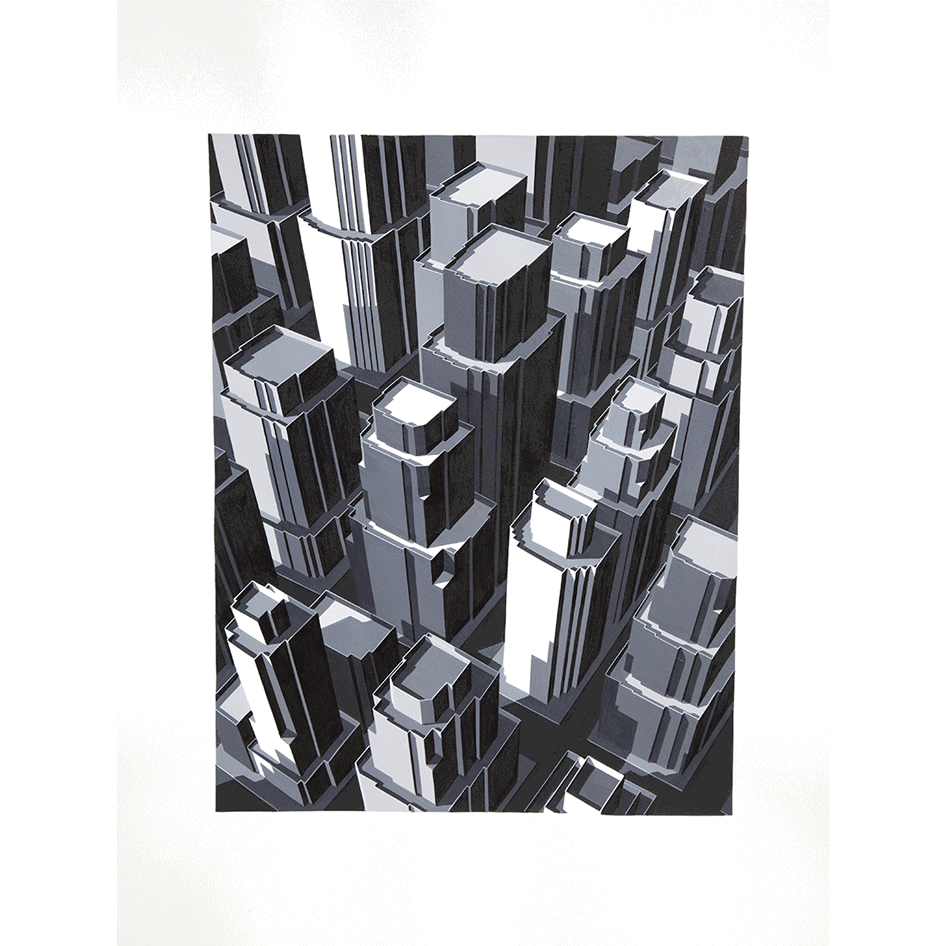
PERDITION
Acrylic on paper
76 x 56 cm
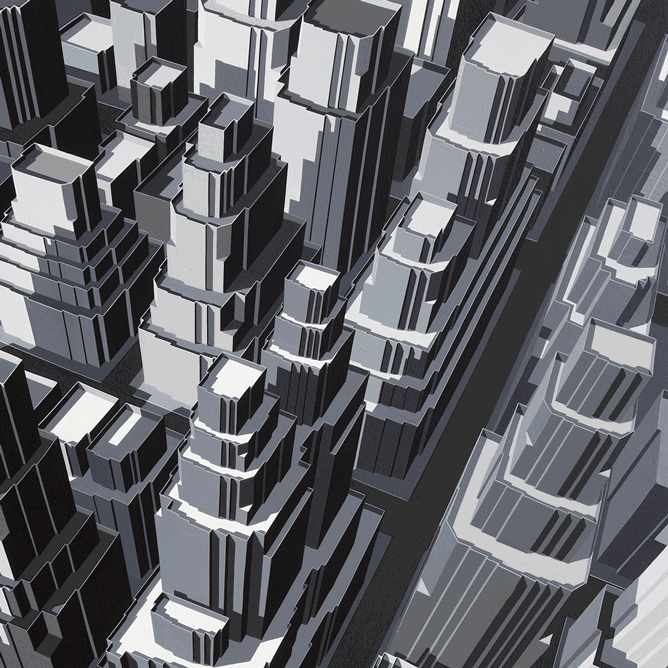
STEEL AND CEMENT. Detail
Acrylic on canvas
106 x 76 cm
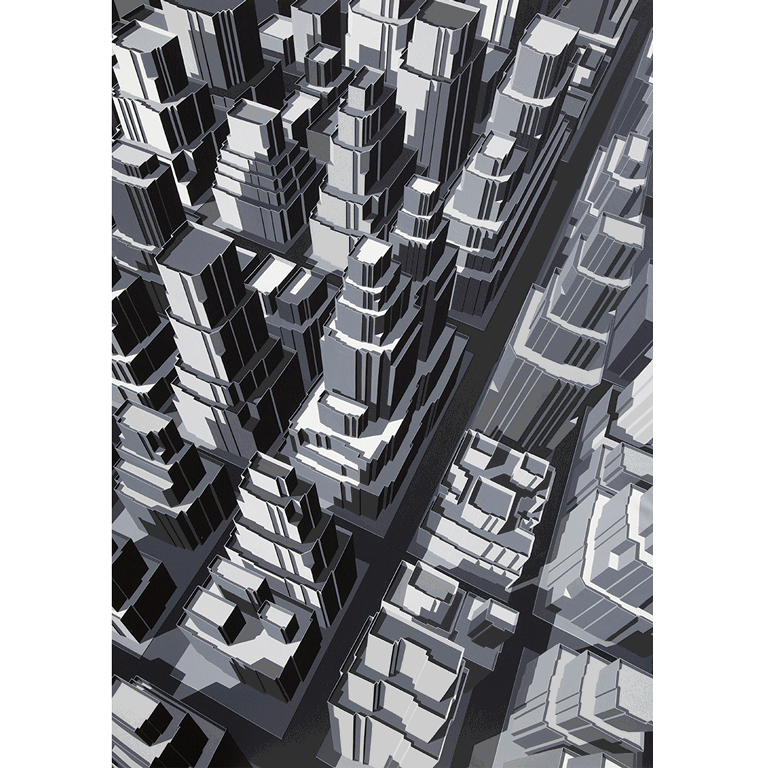
STEEL AND CEMENT
Acrylic on canvas
106 x 76 cm
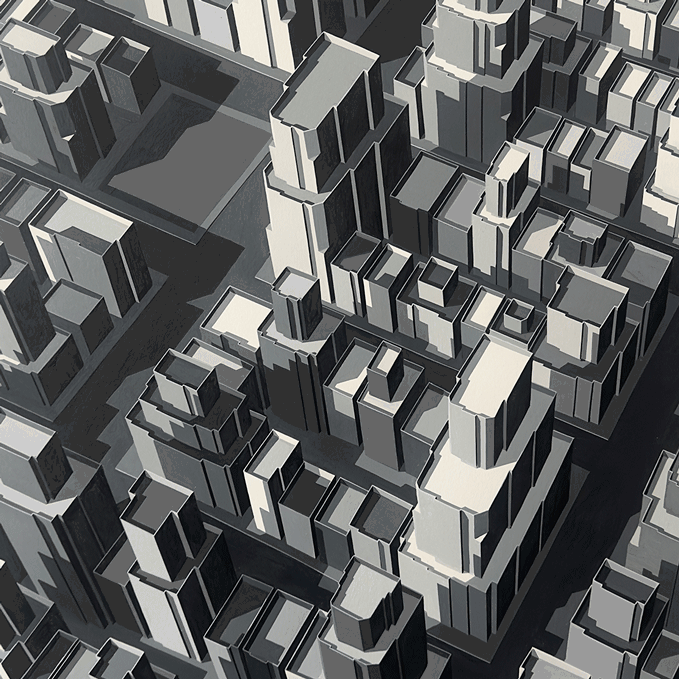
THE SHORTCUT TO THE STAGE. Detail
Acrylic on paper
100 x 70 cm
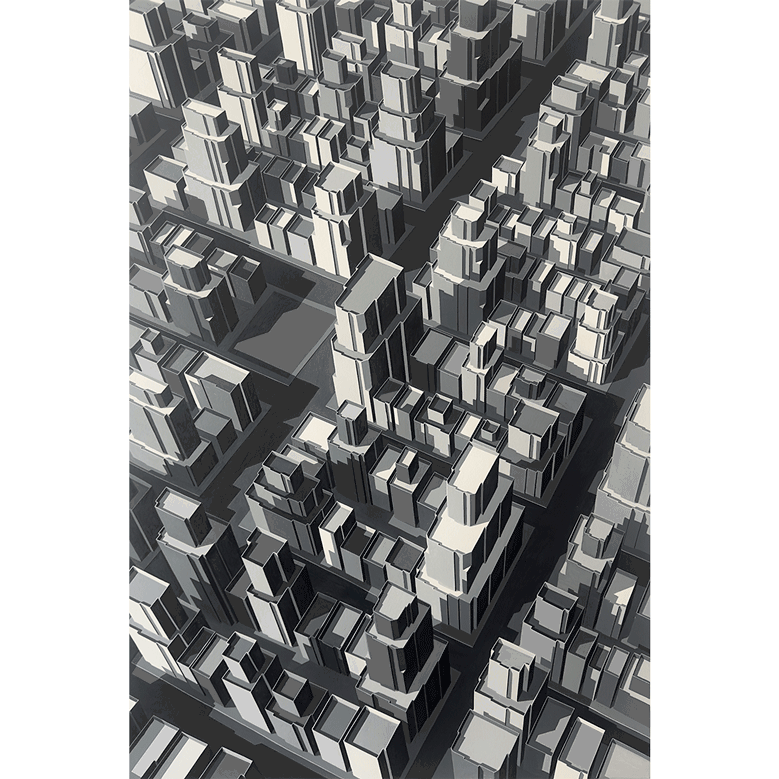
THE SHORTCUT TO THE STAGE
Acrylic on paper
100 x 70 cm
